
Believe, Then Build
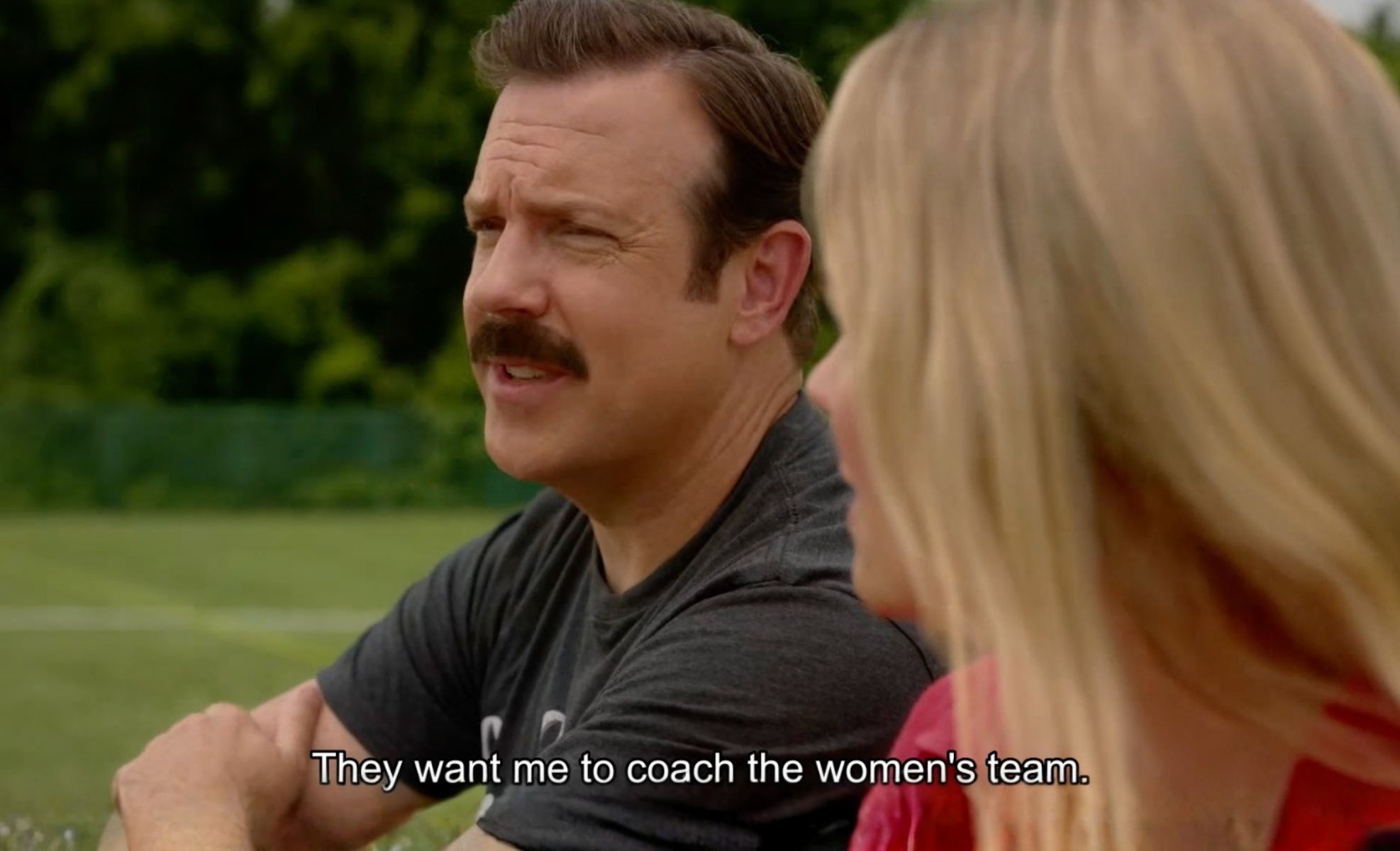
Ted Lasso is back, but this time Ted has a new team, a smaller budget and a much bigger problem. Before Richmond’s Lady Greyhounds can worry about winning, they have to face the realities of women’s football. Season 4 steps straight into the worlds of investment, culture and the challenge of building a team from the ground up.
By Glorious
Kansas City is, confusingly, largely in Missouri.
There is also a Kansas City in Kansas, because apparently one Kansas City was not enough.
The two cities sit across a state line, sharing a metropolitan area, a football team and, in the opening episode of Ted Lasso’s fourth season, a useful lesson about what it means to build women’s sport properly.
N.B. There may be a few episode one spoilers ahead. Proceed with caution!

The Apple TV+ comedy, created by Bill Lawrence, Jason Sudeikis, Brendan Hunt and Joe Kelly, has always been interested in what football does to people. Its optimism works because it is attached to characters rather than slogans. Ted transformed AFC Richmond’s men’s team by giving its players a culture, a sense of belonging and an almost aggressively sincere belief in their own potential. Now Rebecca (Hannah Waddingham) wants him to do the same for the women.
Rebecca Welton, Keeley Jones (Juno Temple) and Leslie Higgins (Jeremy Swift) arrive in Kansas City (in Kansas!) for barbecue, jazz and an education. Higgins approaches the trip with the enthusiasm of a man who has been promised a museum and a very good lunch. They are there to research the women’s game in the United States, hoping to persuade Ted Lasso (Jason Sudeikis) to return to Richmond and coach a newly formed women’s team, the Lady Greyhounds.

The Lady Greyhounds are a new, second-division side with their own players, their own problems and, at least initially, rather less money. Rebecca believes Ted can give them the same culture and sense of identity he gave the men. Ted, who has spent three years trying to build a life outside football, is less immediately persuaded.
The warning comes from Twickenham FC Women, whose collapse Higgins describes with the bleak efficiency of an accountant reading out the weather. The club, he explains, was “a well-intentioned but financial liability” that had been draining resources from its men’s team. Rebecca says Richmond will be different. Higgins responds with the air of a man waiting for the rest of the sentence to explain why, this time, the laws of arithmetic will be taking the afternoon off.

Women’s football has spent the last few years being presented as a success story, with record crowds, major tournaments, new sponsors and more media attention than ever before. It is tempting to look at all of that and say the game has arrived. But a sport can become highly visible without becoming financially secure. Growth and sustainability are not remotely the same thing.
This is what makes the Lady Greyhounds such an interesting choice for the show. They are not a fictional Chelsea or Arsenal equivalent, already equipped with global stars, a packed stadium and a commercial machine powerful enough to make almost any new project look viable. They are a second-division team. They have less money than the men, shared facilities and the uneasy status of a project that still has to prove its value.
sustainability
Reuters’ reporting on the season confirms that these inequalities are deliberate parts of the story. Richmond Women have a smaller budget than the Premier League side and a cramped locker room that they share during part of the week. The production also drew on people working in women’s football while developing the storyline.
This leaves every character facing a distinct set of stakes. Ted is not simply trying to coach a football team. Rebecca is not merely overseeing another sporting operation. Keeley is not doing decorative public relations in the background. Each of them is confronting a different version of the same question: How do you build something when the world has not yet decided that it is valuable?

For Keeley, that means making people care. Her task is not just to announce fixtures or produce cheerful social media content. She has to persuade people to attend, to pay attention and to think of the Lady Greyhounds as entertainment rather than an obligation. That is a more complicated challenge than “raising awareness”, a phrase that often allows sports organisations to congratulate themselves before anybody has actually bought a ticket.
Stereotypical

Women’s football needs visibility, but visibility is only the beginning. It needs fandom, the habits that surround fandom, from following a club between matches to wearing its shirt, bringing friends to games and caring what happens when the season is not attached to a major tournament. Keeley’s problem is therefore not a side plot. It is the cultural and commercial problem of women’s sport in miniature.
After a whirlwind tour of bedazzled suits, jazz detours, and copious amounts of barbecue sauce, that commercial problem gets a physical shape. Rebecca, Keeley, Ted and Higgins arrive to find a women’s football operation that looks radically different from the one they left behind. The contrast between a club folding in England and the Kansas City Current playing in a stadium built specifically for a professional women’s team is almost too neat, but that is precisely why it works on television.

CPKC Stadium opened in 2024 as the first stadium in the world purpose-built for a professional women’s sports team. The project was announced as a $140 million investment, with a capacity of 11,500. The Current’s owners did not wait for women’s football to become a fully established commercial product before giving it a home. They built the home as part of the argument that the product could become one.

There is a reason Kansas City can look so different from Richmond- The National Women’s Soccer League (NWSL) is built around franchises and expansion. A new club enters through an ownership group and a league place, not by climbing through a promotion and relegation system. That can make it easier to gather a large amount of private money around one project, particularly when the owners are willing to build the stadium, training ground and brand at the same time.
English women’s football has grown inside a different kind of football culture. Its pyramid offers promotion, relegation and the possibility of climbing through the divisions, but many clubs still operate under the umbrella of men’s teams. That means access to money, facilities and commercial expertise can depend on the priorities of a larger organisation. A women’s side may belong to a famous football club without receiving the resources required to function like one.
Neither system is automatically perfect. The American model can concentrate investment in a small number of protected franchises. The English model offers a deeper football pyramid, but leaves many women’s teams dependent on shared grounds, subsidies and decisions made elsewhere. Dedicated homes for women’s teams remain unusual. Brighton only announced plans this year for what would become the first purpose-built women’s football stadium in the UK and Europe, with an £80 million project expected to open in 2030. In that context, CPKC Stadium is not simply a nice stadium. It is a declaration of intent.

There is historical baggage here, too. Women’s football in England is not starting from nothing, even if it is often discussed as though it is. In the early twentieth century, the game could draw extraordinary crowds. More than 50,000 people watched Dick, Kerr Ladies play at Goodison Park in 1920, but the following year the Football Association barred women’s teams from using the grounds of affiliated clubs, declaring that football was “quite unsuitable for females and ought not to be encouraged”. The ban did not prevent women from playing altogether, but it pushed the game away from the stadiums, pitches and institutional structures that allowed it to grow. It was not lifted until 1970, with women’s football returning to affiliated grounds in 1971.
That history gives the Richmond storyline a longer shadow. Women’s football is not trying to prove that women can play football. It is rebuilding after almost half a century in which the sport was denied access to the places, resources and legitimacy that help a game develop.

The viewer sees the difference before Ted makes his decision. There is a packed stadium, a serious atmosphere and a sense of an audience arriving for something that has been built to last. It is not Rebecca’s speech that makes the vision legible. It is the spectacle of investment already working.
By the end of the episode, Ted agrees to return to football. Family is part of that decision, but so is what he has seen. The women’s game is no longer being presented to him as an abstract opportunity or a charitable responsibility. In Kansas City, he sees what can happen when the infrastructure around a team is treated as important as the team itself.

That distinction matters because the financial figures tell a more complicated story than the headlines. Deloitte reported that aggregate revenues for Women’s Super League clubs rose by 34 per cent to £65 million in the 2023-24 season. That is significant growth. But combined pre-tax losses also increased to £28 million, while total wage costs rose to £52 million. Growth is happening, but it remains expensive, uneven and dependent on substantial support.
A sold-out stadium does not automatically make the ecosystem underneath it financially secure. A successful England team does not automatically fill grounds throughout the pyramid. A major kit deal does not guarantee that every club has enough money for facilities, staff, travel, medical provision or marketing. The most visible parts of women’s football can be thriving while the structures around them remain precarious.

That is the story Ted Lasso appears to be setting up. We do not yet know whether the season will deliver on it, or whether the women’s team will eventually become a backdrop for more familiar Richmond conflicts. But the opening episode understands that the game’s most interesting problems do not begin when the referee blows the whistle. They begin with the question of whether there is a properly funded team, a suitable place to play and enough people in the stands to make the whole operation feel possible.

Faye Marsay, who plays the foul-mouthed Richmond centre-back Lizzie, had played for a local girls’ team in Middlesbrough until a knee injury ended it when she was 16. Jude Mack, who plays goalkeeper Boots, found herself training separately from the rest of the cast during an intensive two-week football boot camp, an isolation she says helped her understand the position and, ultimately, the character. For Marsay, returning to the pitch after years away felt, she says, like being “a 10-year-old” again.
The result is not a cast pretending that football is a series of meaningful glances and inspirational speeches. They have to create the small movements of a team, the habits and instinctive relationships that make a group look as though it existed before the cameras arrived.
For the first three seasons, Ted Lasso asked whether belief could help a football team win. The new season seems to be asking what has to exist before belief can become a business, a culture and a future.
delivering

That is also where Ted’s role becomes appealing. He is an outsider, but not an empty one. When he first arrived in England, the joke was that everybody else understood football better than he did. His advantage now is not that he knows more about women’s football than the people already inside it. He does not. It is that he may be less attached to the inherited ideas that have shaped the game around them.
He sees people before he sees a system. That makes him a sensible character to place at the beginning of a team’s construction, provided the show remembers that his optimism cannot be the thing that solves the structural problem.
There is a pleasing irony in the programme taking this subject on. Ted Lasso is itself an enormous commercial property. Richmond shirts are sold by Nike. Apple sells subscriptions around the show. The club has the visual language and licensing machinery of a real football institution, despite being fictional. This is a commercial juggernaut telling a story about how difficult it is to commercialise a women’s team.
The Lady Greyhounds are still trying to become a brand inside the show, while Richmond is already one outside it. Their fictional struggle mirrors the gap between the value people claim to see in women’s sport and the resources they are willing to put behind it.

We’re only at the beginning of the series, so it would be premature to describe Season 4 as a definitive diagnosis of women’s football. The series may understand this premise beautifully, or it may eventually discover that the premise is more interesting than what it wants to do with it. For now, the most honest response is anticipation. Ted Lasso has chosen to tell this story. Now it has to prove that it understands the story it has chosen.
The opportunity is already clear. The show does not need to tell millions of viewers that they ought to care about women’s football. That would be another speech about visibility. It can do something more useful by giving them characters to care about, problems to understand and a team to follow.

And that is what makes us genuinely excited to see where it goes. Women’s sport has had plenty of moments designed to tell us how inspiring, important or overdue its rise is. What interests us far more is a mainstream show willing to get into the complicated bit that comes afterwards. The money. The audiences. The facilities. The people trying to turn momentum into something that might actually last.
It is only the beginning of the series, and Ted Lasso could still make a complete hash of it. But for now, I’m in. Not because the Lady Greyhounds are another sign that women’s football has finally “made it”, but because the show seems interested in a much better question.
What happens now?
Season 4 has only just begun, and we’ll be watching closely. Let us know what you make of Ted Lasso’s take on women’s football over on Instagram @glorioussport.
Title image: Still from Ted Lasso, Season 4. © Apple TV+
Editorial Design by this is root
Share This Article
If you love this you’ll also love...
PART 2: Cheer
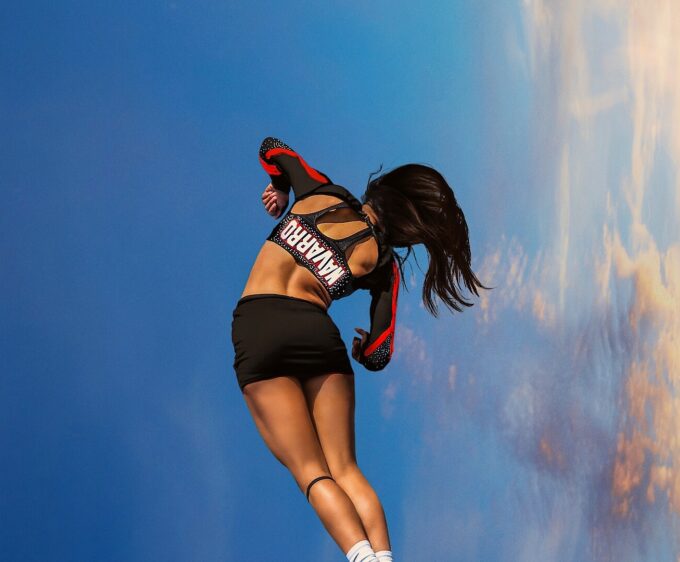
In 2022, Glorious examined how Hollywood turned one of the world's most demanding sports into one of its most enduring stereotypes. Four years later, cheerleading is still loud, still proud, and still smiling, but now mainly on its own terms. Documentaries, social media, and a new generation of filmmakers are finally closing the gap between Hollywood and reality.
WAFCON 2026
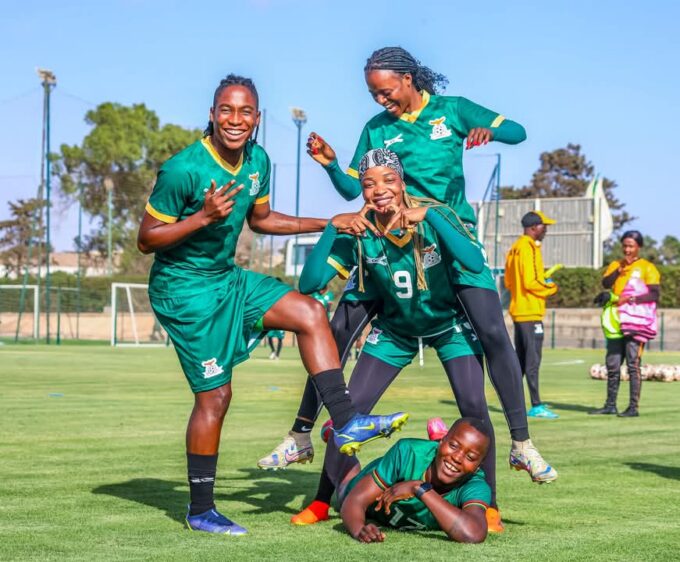
There was a time when WAFCON introduced the world to Africa's brightest footballers. Today, many arrive in Morocco as established stars. The tournament hasn't become less important because of that. If anything, it has become even more fascinating.
Higher Love
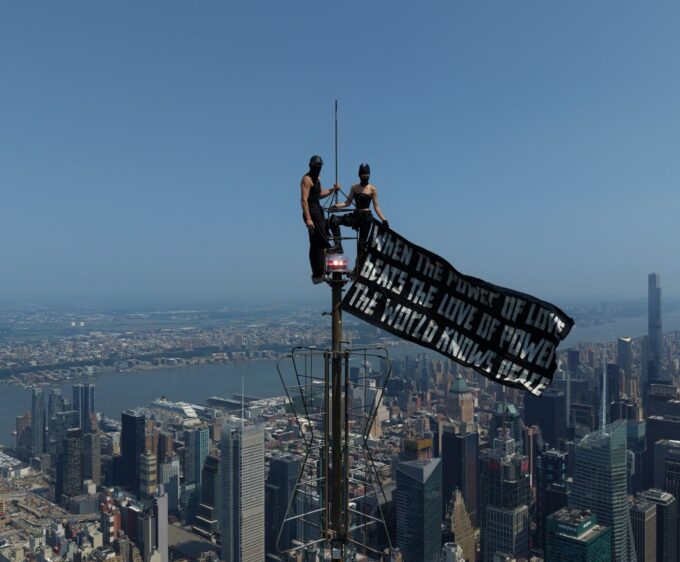
It took a 1,454-foot free climb to the top of the Empire State Building to secure an unforgettable proposal. But the arrest is only the latest chapter in Angela Nikolau and Ivan Beerkus' extraordinary love story.

#Fitspo
Are online fitness influencers masters of deception or authentic role models? We deep dive into the rise of #deinfluence with imagery generated by an AI bot's response to #fitnessgoals