
Olympic Outcast
Nordic combined is dying on its feet and women are the only thing that can save it. Annika Malacinski is fighting to make sure 2026 is the final year she is forced to stay cheering her brother on from the sidelines.
By Jess Oliver
Whilst the International Olympic Committee has been busy congratulating itself for hosting the most gender-balanced Winter Games in history ( with 47% female participation for the first time), there remains one rather glaring exception to all this progressive backslapping at Milano Cortina 2026. Nordic combined, the discipline that requires athletes to launch themselves off a ski jump and then, hours later, race a 5km or 10km cross-country course, with the first across the line declared the winner, has existed since the very first Winter Olympics in 1924. It is a test of explosive flight and endurance on the same day. And it is still the only winter sport that excludes women entirely. Not just at these Games, but at every Olympic Games ever held.

Which brings us to Steamboat Springs, Colorado, and the Malacinski family, whose situation perfectly encapsulates the absurdity of the whole affair. Niklas Malacinski, aged 22, is competing for Team USA at MilanoCortina 2026. His sister Annika, aged 24, is not. And before you assume this is a story about talent or qualification or form, let me stop you there. Annika is ranked 10th in the world. Her brother is ranked 29th. She jumps the same jumps, skis the same courses, trains just as hard, and is performing at a level that would make her an Olympic athlete if a women’s event existed.
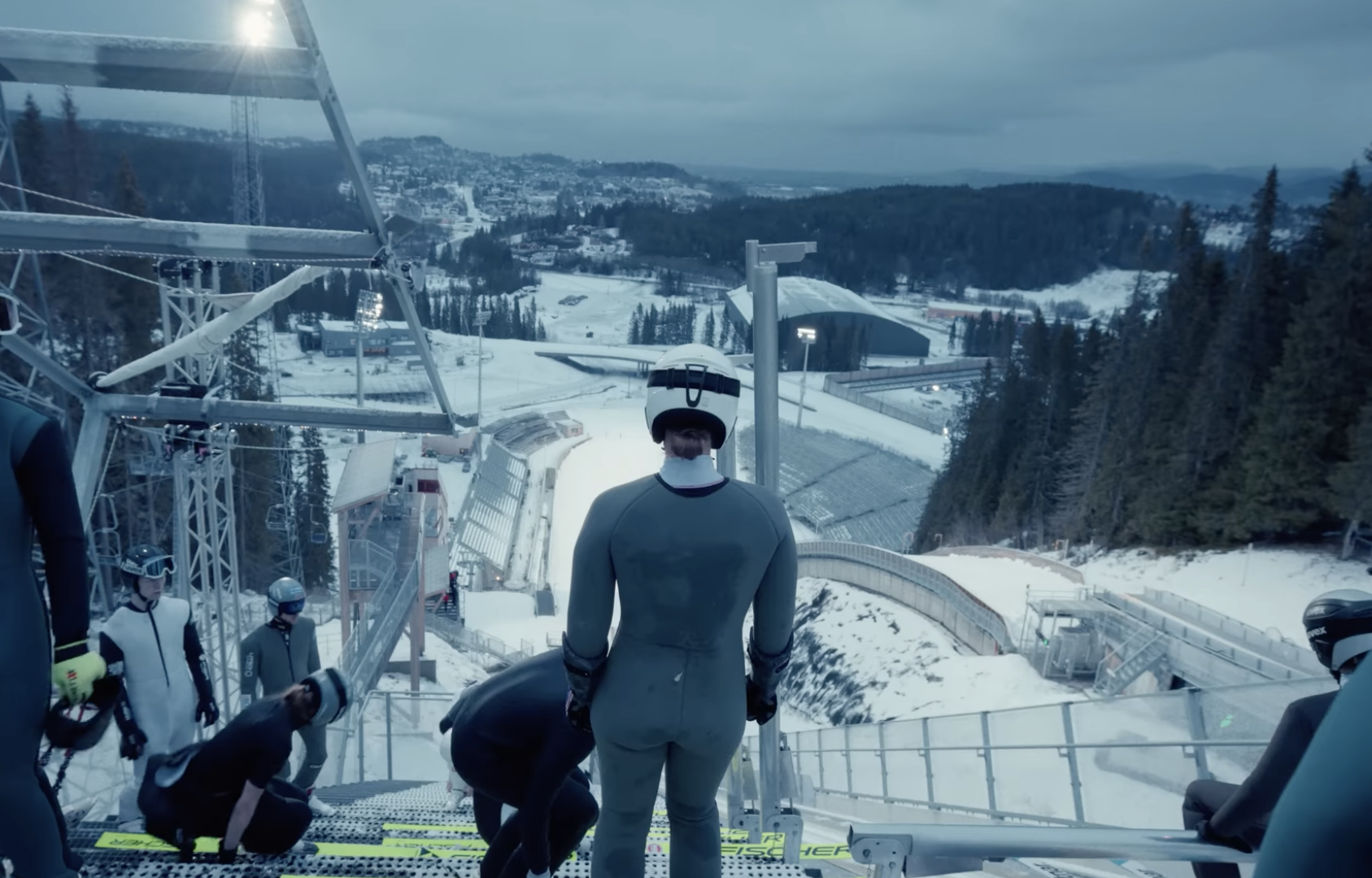
She has chosen not to let that contradiction sit quietly. In collaboration with Glimpse Films, Annika co-created a ten-minute documentary titled Annika: Where She Lands, following her training and her campaign for inclusion as the IOC weighs the sport’s future. It is calm, measured, and quietly devastating. There is no melodrama, just an athlete laying out the facts of her life and the system she is trying to change. It is difficult to finish it without feeling that something fundamentally illogical is playing out in front of you. If the IOC insists this is about universality and viability, her story makes it clear what is actually at stake.
endurance

The children of a Colorado ski instructor father and a Finnish mother from the Arctic Circle, both siblings grew up skiing almost before they could walk. Niklas fell for Nordic combined at seven after meeting Todd Lodwick, Johnny Spillane and Billy Demong when they brought their 2010 Olympic silver medals back to Steamboat Springs. He held those medals and decided he wanted one too. Annika initially had different plans, pursuing gymnastics with Olympic dreams of her own, albeit for the Summer Games. But injuries forced her out of gymnastics at 16, and she turned to her brother’s sport almost on a whim. Her first jump off a 40-metre ski jump terrified her, but the adrenaline rush afterwards was enough to hook her completely.

Both joined the US National Team in 2018. Both have sacrificed enormously. Both have achieved remarkable results on the international stage. Yet only one gets to compete at the Olympics, and it has nothing whatsoever to do with merit.
Annika has competed at World Championships, notched a personal best eighth-place finish, and was part of the first ever women’s Nordic combined World Cup and the first ever women’s World Championships, competing at a time when the discipline was still fighting for recognition. Niklas has had an impressive season himself, including four top-20 World Cup finishes and a career-best 13th place. And of course, there is no disputing he absolutely deserves his Olympic glory. But the comparison is not meant to diminish his achievements. It is meant to highlight how utterly nonsensical it is that a system exists where a 26th-ranked male athlete competes whilst a 10th-ranked female athlete watches from the stands.

Ambitions
The IOC has offered various justifications over the years. Lack of participating nations, they say. Limited podium diversity. Poor viewership numbers. None of these arguments survive even cursory examination. Since the first women’s World Cup in 2020, eight different nations have reached the podium in women’s Nordic combined. The men’s events over the same period? Seven. As for viewership, it is rather difficult to build an audience for a sport that receives virtually no broadcast time, minimal promotional support, and has been systematically excluded from the biggest stage in winter sport for over a century.
There is also a delicious irony in the IOC’s concerns about the sport’s viability. Male participation in Nordic combined has been declining sharply. Only 36 athletes are competing at Milano Cortina, down from 55 at Beijing 2022. The sport faces the very real possibility of being removed entirely from the 2030 Winter Olympics in the French Alps. So here we have a sport that is dying on its feet in its male-only format, and the one thing that might actually save it by expanding its reach, broadening its appeal and injecting new energy and relevance is the very thing the IOC refuses to allow.
Annika remembers exactly where she was when the decision came down in June 2022. Somewhere over the Atlantic Ocean on a flight from Munich to Denver, having paid for airplane wifi specifically to join a conference call with the IOC. She was certain, absolutely certain, that women’s Nordic combined would finally be added to the Olympic programme. Then came the announcement. No. No explanation, no discussion, just no, and then they moved on to the next topic. She cried for eight hours straight on that flight. When she landed in Denver, her eyes were swollen shut.
She has since become the most prominent voice in the fight for inclusion, building a substantial social media following and accepting every interview request that comes her way. Just days before these Games began, she and other female Nordic combined athletes staged a protest in Seefeld, Austria, raising their ski poles overhead in an X formation to symbolise no exception. But she is careful to emphasise that this is not a battle between men and women. The athletes need each other. When people comment on her posts suggesting boycotts of the men’s events, she pushes back hard. The goal is to raise awareness of how brilliant the sport is, to get people watching and talking about Nordic combined, to support one another rather than tear each other down.

Her brother Niklas fully supports her advocacy. The siblings have travelled the world together, competed at the highest levels, maintained their bond throughout. For him, having his sister at competitions feels like carrying a piece of home wherever he goes. At these Games, she is present, not as a competitor but as a spectator and advocate. She is cheering for her brother, supporting his Olympic dream even as she grieves the one she is not allowed to chase.
It is bittersweet, she says, and that word does not quite capture the complexity of watching your younger sibling compete in the sport you both love, on jumps you have both conquered, on courses you have both raced, whilst being told your dreams matter less because of your gender. She knows how hard Niklas has worked and believes he absolutely deserves to be here. But she has worked just as hard. She has achieved more. And she is sitting in the stands because in 2026, in what the IOC proudly proclaims as the most gender-balanced Winter Olympics in history, there remains one last line that women are not allowed to cross.

The sport itself is at a crossroads. If Nordic combined does not make it to the 2030 Games, most countries will likely cut funding entirely. The whole discipline could vanish from the elite level. Women could be the lifeline that saves it, bringing fresh attention, new audiences and genuine competitive depth. But first, they have to be allowed through the door. Annika says she is a very gritty person, that when she puts her mind to something she can achieve it. She will continue fighting for 2030 because, as she puts it, that is her rightful place.
Meanwhile, the competitions continue at Milano Cortina 2026. Niklas Malacinski will jump and ski for Team USA. His sister will watch and cheer and continue her campaign. And the IOC will continue to face questions about how, in 2026, with all the rhetoric about equality and progress and gender balance, they still cannot bring themselves to let women compete in a sport that has been part of the Winter Olympics since its very beginning. The answer, it seems, is that sometimes the oldest traditions are also the hardest to change, even when they make absolutely no sense at all.

The critical window is now. The IOC will conduct a full evaluation of Nordic combined following these Games, with a decision on whether to include the sport at all, and whether to add women, coming in June 2026 for the 2030 French Alps Olympics. Here is what you can do:
Sign the petition
Sign the petition at nordiccombinedusa.org (it’ a pop-up). It directly calls on the IOC to add women’s events and achieve equality.
Follow and share on social media
Follow @nordiccombinedusa, @annika.malacinski, @FISNordicCombined on Instagram and TikTok. Share their posts, amplify their stories, help build visibility.
Watch the documentary
Watch Annika Malacinski’s 10-minute documentary called Annika: Where She Lands on YouTube and share it widely (film credits below).
Write to the IOC
Nordic Combined USA provides a sample letter and the address is International Olympic Committee, Maison Olympique, Château de Vidy, 1007 Lausanne, Switzerland. You can find templates at nordiccombinedusa.org/olympic-advocacy.
Subscribe and donate
Subscribe to SkiAndSnowboard.Live (region specific) to stream women’s Nordic combined events, building viewership data. Consider donating to Nordic Combined USA, the nonprofit established by parents after USA Nordic Sport cut all funding in June 2024.
Every signature, every view, every social media share, every letter adds to the pressure for change. The question is whether enough people care to make it happen.
Watch the men’s events
That is not a contradiction. It is part of the argument. The IOC has repeatedly cited limited interest and global reach when justifying the exclusion of women’s Nordic combined. If the sport’s future is under review after these Games, then audience data matters. Ratings matter. Engagement matters.
Men’s Nordic combined events are scheduled for 17 and 19 February at these Games. Tune in. Put it on in the background. Talk about it. Post about it. If you are in a position to organise a watch party, do it. Visibility is currency in Olympic sport, and right now Nordic combined needs as much of it as it can get.
Supporting the men does not weaken the case for women. It strengthens the case for the sport as a whole. And if the discipline is fighting for survival heading into the 2030 review, showing that people are paying attention is part of the pressure.
TITLE IMAGE: Still from ‘Annika:Where She Lands’ (Watch on Youtube)
Follow ANNIKA: / annika.malacinski
A Glimpse Films production: ‘Annika:Where she Lands’ (Watch on Youtube)
Credits:
By GLIMPSE: / glimpse.films
Directed by: Mike Schwartz / mikeyschwartz
Produced by: Nadchielly Sain / nadchielly_lynn
Edited by: Scott Hanson / scootpequeno
Cinematography: Mike Schwartz + / mikeyschwartz Andy McCallie + / andy_ando_
Color: Nick Sanders / nicksanders.tv
Sound: Mike Regan / mikeregannoise
Filmed on location in Trondheim, Norway
Share This Article
If you love this you’ll also love...
Cold Kits
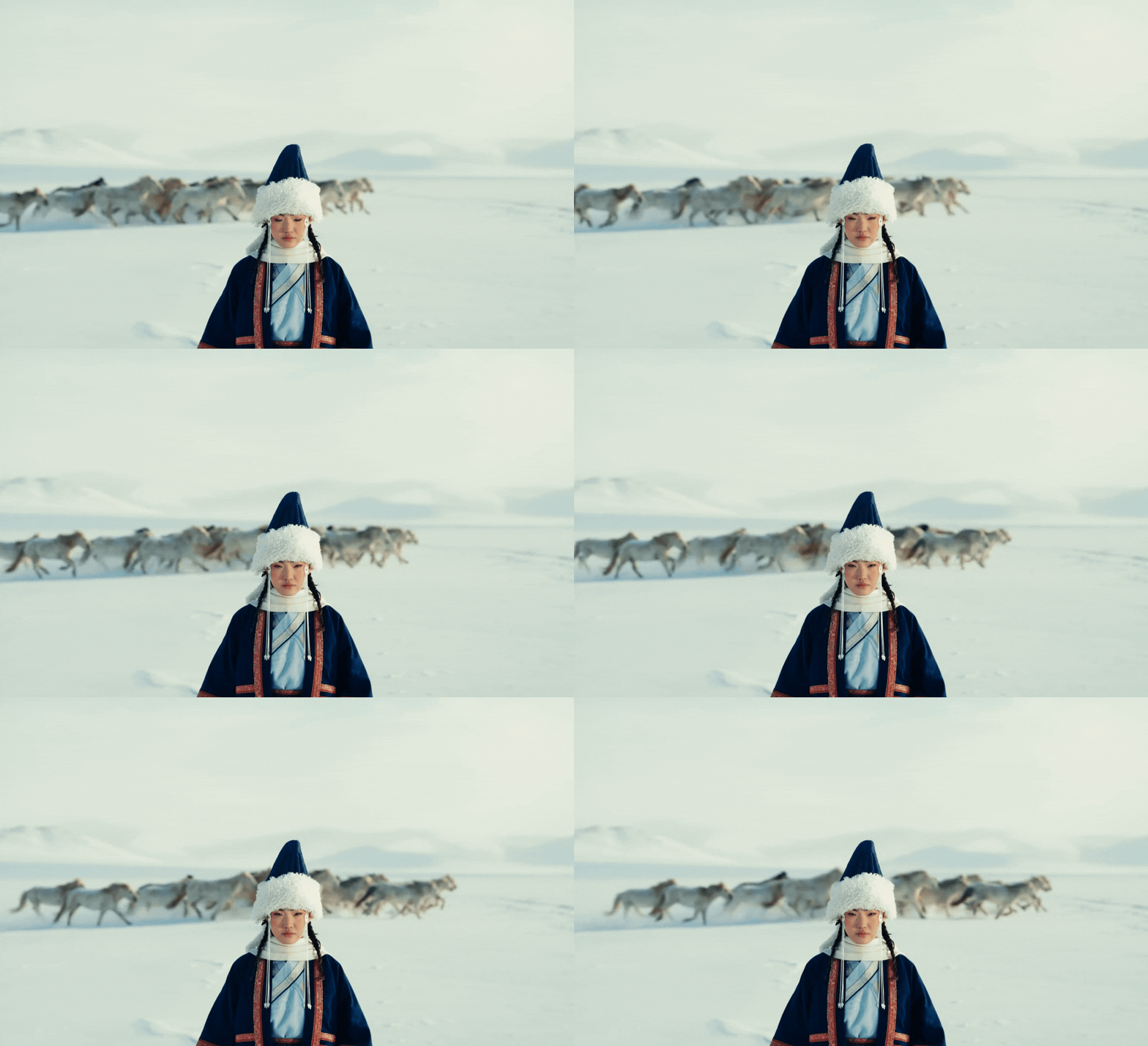
Before a single ski leaves a track or a bobsled hurtles down the run, Milano Cortina 2026 has already crowned its fashion winners. Here's our definitive ranking of who's winning before the competition even starts.
Slope Sound
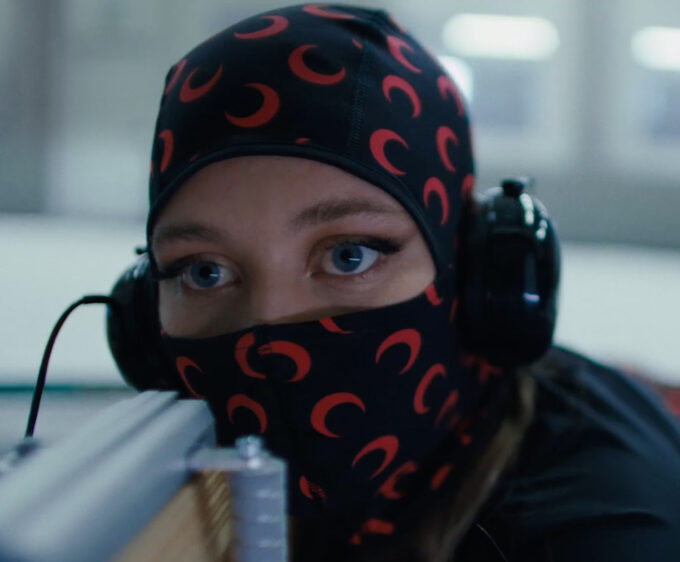
It's hard to imagine hurtling down a ski slope without eyesight, but that's exactly what Austrian skier Carina Edlinger does. In her own words, Carina details how she has found ways to overcome her disabilities to help her win and – more importantly – find happiness in life
Sporting ASMR
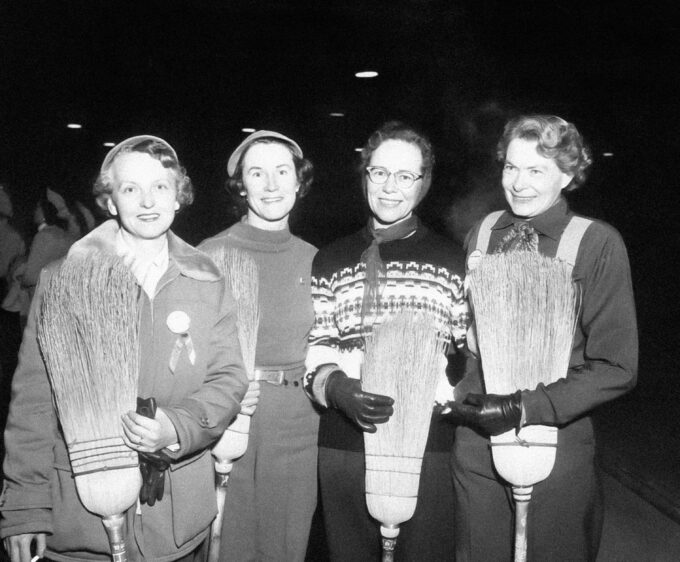
Curling might be the most underrated spectator sport on earth. Here's why one woman thinks everyone with an overactive brain should be watching it.
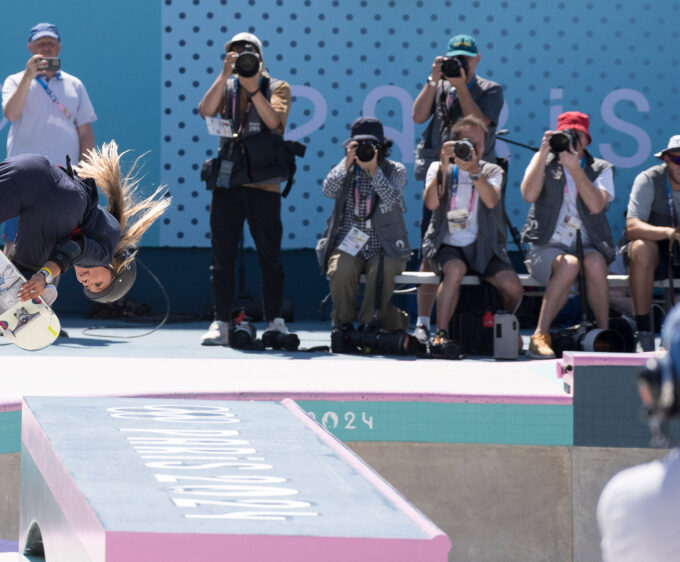
We Mind the Gap
As the Paris Olympics achieve gender equality among athletes for the first time, questions remain about equal representation in the media. Outdoor sports photographer and producer, Hannah Bailey, travelled to Paris to investigate the gender imbalance amongst sports photographers and connect with other female image-makers.