Our Katie
Katie Taylor became globally famous without an enemy, a persona or an opinion designed to annoy half the internet, and has always seemed almost magnificently uninterested in the business of being famous. So what can one of sport’s quietest superstars teach us about taking up space?
By Lou Walsh
Photography by Mark Robinson
There are not many people Ireland agrees on. We can turn almost anything into an argument if given sufficient time and access to a radio phone-in, but Katie Taylor appears to have slipped through the net. For more than two decades she has been famous in Ireland, properly famous, and somehow remains almost universally liked. Not tolerated. Not grudgingly respected. Loved.

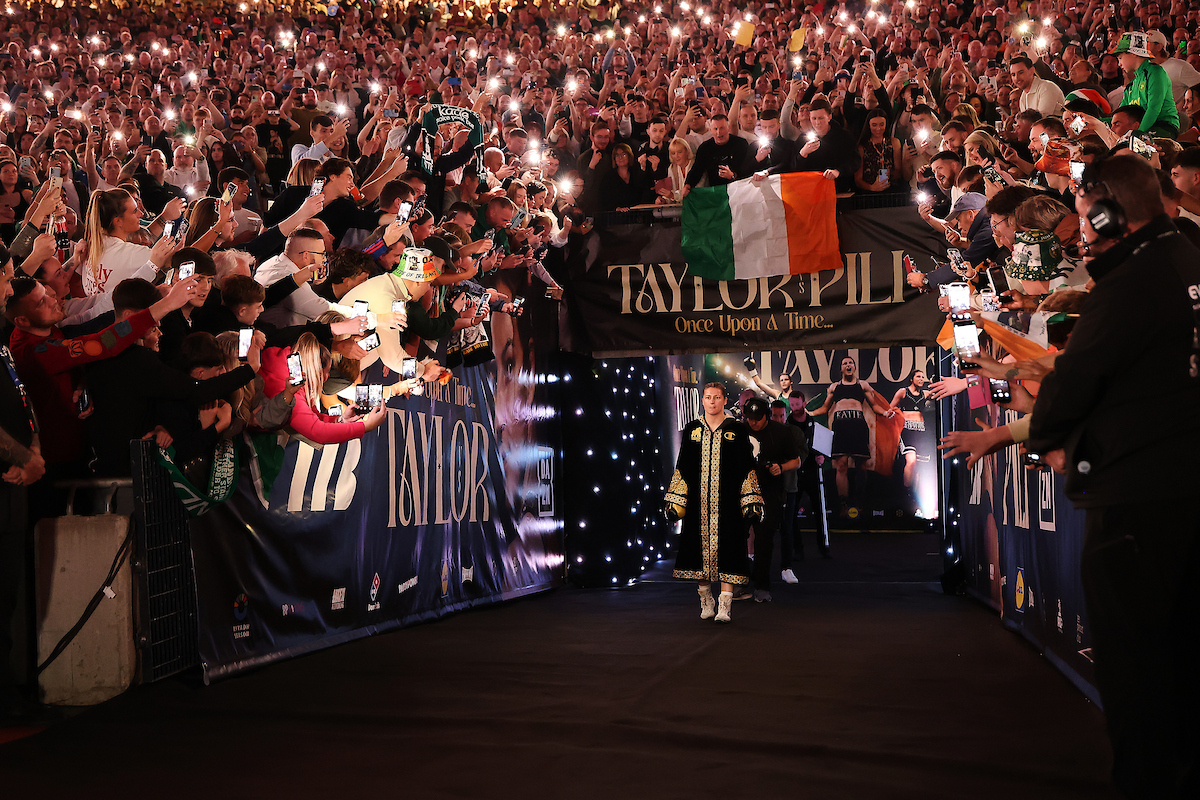
More than 80,000 people came to Croke Park on Saturday night to see her fight for the final time, which feels about right. The last time the stadium hosted professional boxing was in 1972, when Muhammad Ali fought Al Lewis. Fifty-four years later, it belonged to a softly spoken woman from Bray who has spent much of her career looking faintly bewildered by the idea that anybody might want her to make a fuss about herself.
This is quite an achievement when you consider she chose boxing, a sport that has never exactly suffered from a shortage of personality. Boxing is built on noise. It needs jeopardy and theatre and people telling each other what they are going to do to one another on Saturday night. In the age of social media, that theatre has become an industry of its own. The face-off can travel further than the fight. The insult becomes the headline. Everybody understands that attention has a monetary value.

Katie Taylor has never been particularly interested in selling Katie Taylor. Ask her about an opponent and she will generally say something respectful before getting back to work. Put her beside a promoter trying to manufacture a bit of jeopardy and she has the air of somebody politely waiting for the dentist. Yet beneath the soft voice and impeccable manners is one of the most extraordinarily self-assured athletes Ireland has ever produced. She has always known exactly what she wanted, and usually found a way of getting it.
Taylor understood what she was capable of very early. The problem was that boxing had not caught up.
When she started going to Bray Boxing Club with her father Pete, girls could not officially box in Ireland. She tucked her ponytail into her headguard, fought boys and was sometimes entered simply as K Taylor. At 15, she fought Alanna Audley in Ireland’s first officially sanctioned women’s boxing contest. When women’s boxing was still fighting for Olympic inclusion, Taylor travelled to showcase bouts in front of International Olympic Committee officials, helping make the case that women belonged at the Games. AIBA president Ching-Kuo Wu would later say that without her, women would not have boxed at London 2012.

In the summer of 2012 I had just moved from Galway, was living in London and working in a bar with one old TV screen streaming the Olympics happening half a mile down the road. In the spirit of Olympic generosity, and possibly to compensate for the awful picture quality, senior management had decided that every time Team GB won a gold medal everybody in the bar got a free pint. Britain won a lot of them, so it was an excellent Olympics for the customers and a fairly exhausting one for those of us pulling the pints.

Our Irish manager eventually introduced his own counter-offer. An Irish medal meant a free shot. There were, let’s be honest, rather fewer of those flying around.
Then Katie started boxing and suddenly a group of Irish people in a London bar who couldn’t have explained the finer points of amateur scoring became experts in it. By the time she fought Sofya Ochigava in the lightweight final, it felt like half of Ireland had somehow squeezed itself into the ExCeL and the other half was shouting at televisions elsewhere. Taylor won 10-8 and became Olympic champion at the first Games in history to include women’s boxing.

I remember being delighted to finally qualify for a shot, but mostly I remember the pride. That slightly ridiculous proprietary pride Irish people develop when one of us becomes world class at something. Katie wasn’t from my family, obviously, but for an evening in London it felt faintly as though a relative had won the Olympics.
I have followed her career ever since, although “followed” probably makes me sound considerably more diligent about boxing than I have been. She has simply always been there, part of the infrastructure of being Irish. Governments change, Dublin gets more expensive, another cousin moves to Australia, and Katie Taylor wins another boxing match.
ferocious

Then came the professional career. Taylor reached out to Eddie Hearn of Matchroom Boxing, who had never matched a women’s fight before, with a Twitter message that remains perhaps the most Katie Taylor job application imaginable. Terribly sorry to bother you, Eddie. I was just wondering whether you might fancy helping me revolutionise another branch of boxing?
“I think I could do for women’s boxing what I did for the amateur sport; bring it into focus and generate a serious interest,” she wrote. “Much appreciated, Katie.”
They met in London with Taylor’s mother Bridget and her manager Brian Peters. Hearn signed her and the following month she made her professional debut. Within seven fights she was a world champion. By her 14th she was undisputed.
The partnership that began with a Twitter message lasted for the entirety of Taylor’s professional career, although for much of it there wasn’t actually a contract. Hearn revealed before her final fight that they hadn’t had a promotional contract for “years and years and years”, adding that if she screwed him over, he would retire, because “you just know it would never happen”. She stayed with Brian Peters throughout, too, as well as her trainer Ross Enamait. Boxing is a business in which loyalty can occasionally seem less useful than a decent left hook, but Taylor kept the same small circle around her.

Her Christian faith has always sat somewhere in this too. She has spoken openly about her belief in God throughout her career, sometimes quoting scripture after fights, and has described faith as the most important thing in her life. At Croke Park she walked out to All Hail King Jesus, not the most obvious song with which to get a party of 80,000 people started, but somehow it did.
In 2018, Taylor fought in Boston on a packed card at TD Garden, but the Irish crowd had largely come for her. After her fight, so many people left that the arena felt dramatically emptier. The following morning Taylor sat down to breakfast with Hearn and asked him how much Tevin Farmer, who had fought after her, had been paid. It turned out to be about three times what she had earned. “Do you think that’s fair?” Taylor asked.
Hearn told her it wasn’t, and Taylor pointed out the fairly obvious flaw in an arrangement where more people had come to watch her and yet somebody else was being paid three times as much. Her purses would go from five figures to six figures and eventually into the millions. By the end of her career, Hearn said Taylor was earning more than 99 per cent of male fighters.
There is a tendency, particularly with female athletes, to turn words such as “humble” and “gracious” into compliments so enormous that they swallow everything else. Taylor is both, but neither explains her. She is also demanding, stubborn, commercially astute and ferociously competitive. She knew what she was worth before much of professional boxing did, and she never needed to become somebody else to make them see it.

Nor is this an argument that women should behave like Katie Taylor. Quite the opposite. Alycia Baumgardner should absolutely turn up to press conferences in fur coats holding Birkins. Claressa Shields should absolutely be Claressa Shields, telling everybody within a five-mile radius exactly how good she is. Women’s boxing is infinitely more interesting for having all of them, particularly after generations in which female athletes were expected to be talented without appearing too pleased about it.
There should also be room for the one who can sit quietly at a press conference knowing that the interesting bit happens when the bell rings. For somebody who possesses an almost unreasonable level of self-belief without needing to perform confidence for everybody watching.

Taylor’s first fight with Amanda Serrano in 2022 was the first women’s bout to headline Madison Square Garden. Two years later they met again in Texas on the Jake Paul-Mike Tyson card, streamed around the world on Netflix. Then, in 2025, the trilogy returned to Madison Square Garden, this time at the top of the first all-women professional boxing card in the venue’s history, again broadcast live on Netflix.
There was one professional defeat, against Chantelle Cameron in Dublin in 2023. Six months later Taylor came back and beat her. More belts and more history followed, until eventually there was Croke Park.
Croke Park is not merely a large stadium in Dublin. It is an icon in its own right, bound up in Irish sport, history and identity, and Taylor had wanted to fight there for years. To see more than 80,000 people turn up for her last fight felt less like another entry on her record than Ireland coming out to say goodbye.

Perhaps that is why her retirement feels bigger to me than the departure of an athlete whose fights I happened to watch. She has been around for so long that I can measure bits of my own life against hers. I was behind a bar in London when she won Olympic gold. I am now back on this side of the Irish Sea with three children of my own, two boys and a girl, watching her leave the sport she changed.
And yes, I think about my daughter.
Not because I particularly want her to box. Her brothers provide quite enough unsolicited sparring opportunities at home. And certainly not because Katie Taylor offers some immaculate template for how a woman ought to conduct herself. Women have had quite enough of those. I just like that she has existed in her lifetime.
There is so much pressure now to turn yourself into a product, particularly for young women. To be visible, vocal, interesting, marketable. To have a take. To build a following. To make sure everybody knows when you’ve succeeded and preferably watches you succeeding in portrait mode.
legacy

Taylor offers another possibility. You can be quiet and still take up an enormous amount of space. You can be gracious without surrendering an inch. You can have faith without demanding everybody else shares it. You can ask for more money. You can change the rules. You can be absolutely certain of your own worth without feeling obliged to remind everybody of it every 15 minutes.
Katie Taylor spent much of her childhood having to persuade people that girls belonged in a boxing ring. She leaves the sport having filled Madison Square Garden and Croke Park, made millions, won everything there was to win and helped turn women’s boxing into something girls can now reasonably imagine doing for a living.
I can think of louder role models for my children. I am struggling to think of a better one.

Share This Article
If you love this you’ll also love...
24 Hrs in Monte Carlo
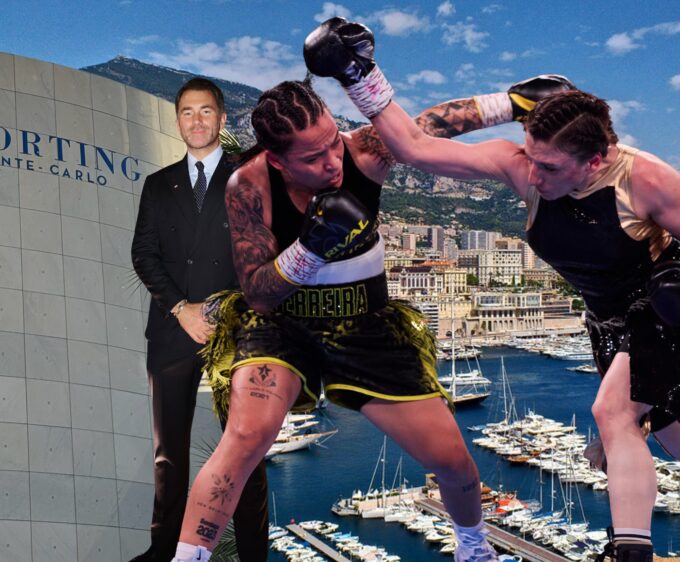
Champagne, fast cars and a world title fight that stopped the room. We go behind the black tie in Monaco for a rare conversation with Matchroom Chairman Eddie Hearn about equality of value, terrifying teenagers and the fight to keep women’s boxing built on substance rather than gimmicks.
TUDUM!
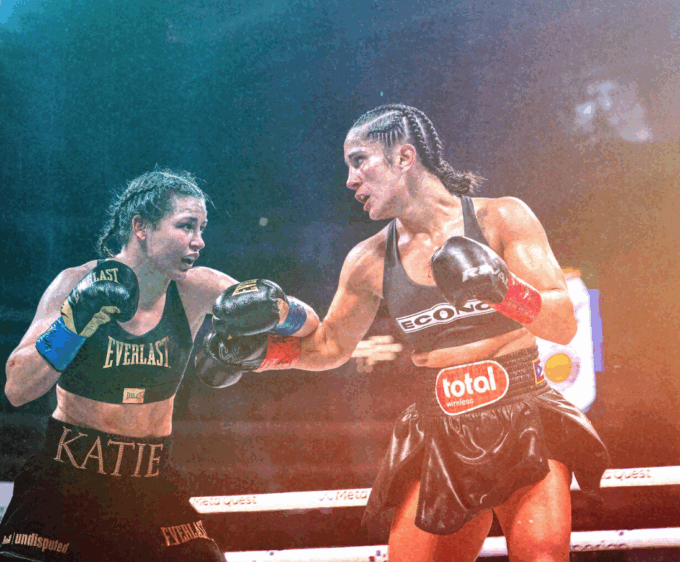
What do true crime podcasts, Chicken Shop Date, celebrity court trials and women’s boxing all have in common? They’re all in my feed. When Netflix served up Taylor vs Serrano III on my homepage, it felt less like a suggestion and more like a shift. Here's why.
Home of Fighters
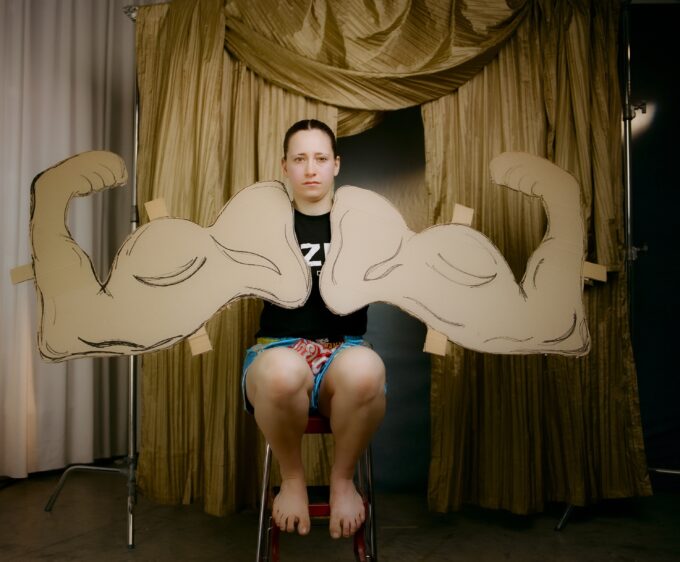
Behind every punch lies a story of resilience, identity and transformation. Andrea Mae’s striking portraits take you beyond the gym to reveal the fragile strength and personal battles of fighters who find home where others see only conflict.
Textured Waves
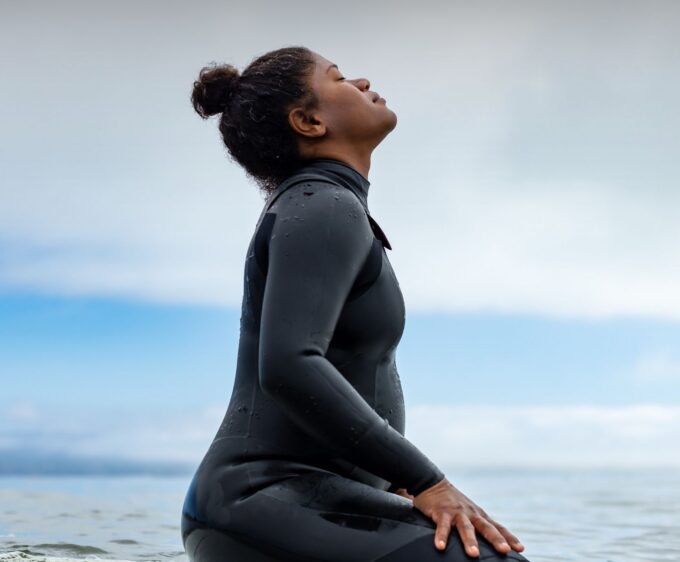
Chelsea Woody is a surfer, registered nurse, filmmaker and co-founder of Textured Waves. From challenging representation in surfing to raising awareness of maternal health, she's using the ocean as a platform for change.