
The Matriarchy
As the World Cup arrives in the United States, much of the conversation has focused on what it could do for the men's game. Yet the blueprint for soccer's cultural relevance in America was arguably written nearly three decades ago... by the women.
By Glorious
The build-up to the 2026 World Cup probably didn’t look like FIFA might have imagined.
Ticket prices have become a story in their own right, but the real battleground is online, where a hilarious, terrifying cultural misunderstanding is playing out over logistics. International supporters heading to MetLife Stadium have spent months on forums debating how to get there, with many casually planning to walk from nearby hotels.

Local Americans have been forced to issue frantic, bewildered warnings: no, you cannot walk across a live New Jersey motorway. The internet has quickly filled with mocking pushback from overseas fans wondering how local police plan to stop 80,000 marching, drinking supporters from simply blocking a multi-lane road. Depending on which corner of the internet you find yourself in, excitement about the tournament sits somewhere alongside bafflement at American car culture, scorching summer temperatures, mandatory water breaks, half-time show speculation, eye-watering transport costs and a political climate that has left some international supporters questioning whether travelling to the United States is quite as straightforward as it once was.
Yet beneath all of that noise sits a much bigger question.

For years, football in the United States has felt like a sport permanently on the verge of something. Every major tournament, every new television deal and every surge in domestic attendance has been framed as another step towards a future where it finally takes its place alongside the country’s sporting giants. The 2026 World Cup is supposed to be the culmination of that journey, which is what makes it so fascinating. Because while everyone is talking about the future of football in America, I keep finding myself thinking about the past.
For most of my life, football has come with an assumed hierarchy. The men’s game sits at the centre of everything. It fills newspapers, dominates television schedules and dictates the rhythm of weekends. Women’s football exists too, increasingly successfully and increasingly visibly, but it is still often framed as the challenger. The growth story. The movement building towards something bigger.
defining

The Lionesses have changed that dynamic more than any team before them. Since winning Euro 2022, they have pushed women’s football into parts of British life that once felt firmly out of reach. Wembley sells out. Players appear on magazine covers. Football shirts turn up at fashion week, at Glastonbury and on people who have never watched a full match in their lives. The Women’s Super League continues to grow, broadcasters are paying attention and brands are investing serious money. Yet even now, football in Britain still largely means the men’s game.
Which is what makes America so unusual. Because it may be the only major football nation where the opposite happened.
This is probably also the point where I should clarify which football we are talking about. Given that a good half of our readership is currently sitting in New York, Los Angeles or Atlanta, and that football in America generally involves shoulder pads, quarterbacks and advertising breaks, we may as well cave to demographic reality, stop being stubborn and call it soccer from now on.

Over the past few months, I have found myself watching an endless stream of Americans discovering European soccer culture on TikTok. There are videos explaining promotion and relegation, reactions to Champions League atmospheres and clips breaking down global audience figures. The reactions are often genuine. People are not discovering soccer itself; they are discovering its scale. They are realising that what feels enormous in America can feel relatively small when placed alongside a game that reaches virtually every corner of the globe.
The funny thing is that while millions of fans are arguing over motorway walks and train tickets, one part of America already solved the soccer problem nearly three decades ago.
Because the challenge was never getting people to watch. The challenge was getting people to care.

At the iconic Rose Bowl in Pasadena, Los Angeles, on 10 July 1999. More than 90,000 people packed into the stadium to watch the Women’s World Cup final between the United States and China. Brandi Chastain scored the winning penalty. Carla Overbeck lifted the trophy. Mia Hamm became one of the most recognisable athletes in the country. Those photographs have become part of sporting history, but they feel particularly relevant right now because they capture something that organisers are still searching for twenty-seven years later: a country that had decided to care.
belonging

The 1999 Women’s World Cup is often remembered as a landmark moment for women’s sport. It absolutely was. It was also one of the most successful soccer stories America has ever produced.
When people discuss the game’s growth in the United States, the conversation usually revolves around what comes next. The legacy of this Men’s World Cup. The expansion of MLS. Growing television audiences. How the sport fits into a landscape dominated by the NFL, NBA and MLB. The underlying assumption is that soccer is still waiting for its American breakthrough.
Women’s soccer already had one. At a time when professional women’s leagues barely existed around the world, when investment was limited and coverage was inconsistent, the US Women’s National Team managed something extraordinary. They became important to people who were not even sports fans. Mia Hamm was not simply a player; she was one of the most recognisable athletes in America. Brandi Chastain’s celebration became one of the defining cultural images of a generation. Years later, Megan Rapinoe would become a global icon because people understood what she stood for, on the pitch and off it.
By the time the United States lifted its fourth Women’s World Cup in 2019, the tournament attracted a global audience of more than one billion viewers. Women’s soccer in America was no longer making a case for relevance. It already held the crown.
That does not mean the men’s game has failed. Far from it. Soccer in America is healthier than it has ever been. More people watch European leagues than ever before, MLS grounds are packed and this World Cup is taking place against a backdrop of genuine domestic momentum.
Yet there remains something slightly ironic about the conversation surrounding the tournament. Everywhere you look, pundits are asking how soccer finally wins America. The country already gave us the answer.
The USWNT, the US women’s national team, became significant because they built a relationship with the pubic that did not necessarily arrive through the traditional turnstiles. They became part of wider conversations about identity, ambition, equality and representation.

Their fierce, public fight for equal pay pushed them into news cycles that reached far beyond the sports pages and opened conversations about work, politics and representation. Their success belonged to dedicated supporters, casual viewers and people who had never watched a full match. In a country where soccer spent decades trying to find its place in the culture, they had already done it.
Perhaps that is why the history of the American game feels so vital as the Men’s World Cup begins. It is a reminder that soccer’s American story did not begin with modern television rights, social media algorithms or wealthy European clubs touring the East Coast every summer.
Some of its most important chapters were written by women long before the world decided to pay attention.
The more interesting question is what happens when the biggest men’s tournament on earth lands in a country where one of soccer’s most successful cultural blueprints already exists. This is not a nation that needs convincing soccer exists, nor one where the sport occupies the same place it does in England, Spain or Argentina. Instead, the game has carved out its own identity, built through participation, immigration, youth culture and, crucially, women’s soccer.
For decades, women’s football was told to prove it belonged.
In America, soccer already did.

What do you think? Has the USWNT already provided the blueprint for soccer’s cultural success in America, or is the 2026 World Cup about to change the story? Join the conversation on Instagram @glorioussport.
Illustrations by Sam Smith, many inspired by US Women’s World Cup victory, 1999
Share This Article
If you love this you’ll also love...
WSL Awards
With the champagne flowing, the dressing-room playlists on the speakers and the entire women’s football pyramid packed into one ballroom, we got the golden ticket to the WSL Football Awards to see what happens when the women’s game gathers under one roof.
Sparking Culture
Dominique Powers’ courtside view to billion-dollar valuations, this is the story of how the LA Sparks and the league they play for braided community, commerce, and culture into a night out that feels like the future.
Match Fit
As Glasgow City opens a public pitch for its next kit partner, we look at the designers and grassroots communities finally treating women’s football like the cultural powerhouse it is.
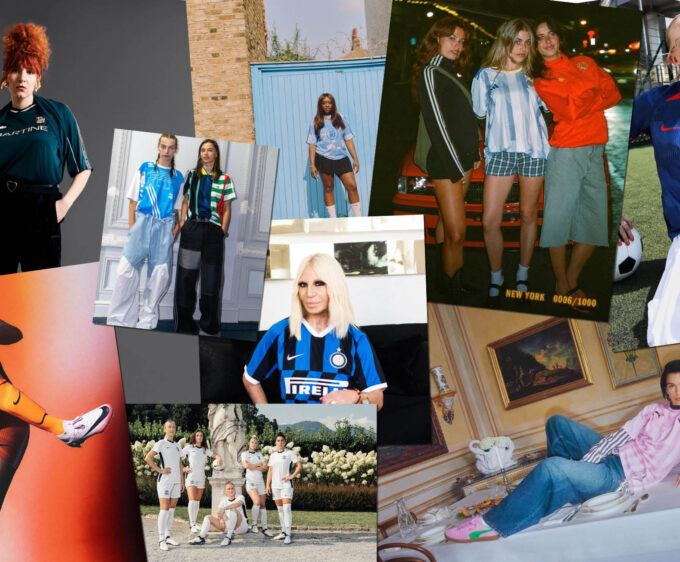
Pitch, Please!
Football shirts have evolved beyond the pitch, entering high-end fashion circles. But why? Is it a rebellious statement against the male-dominated football culture, or just fashion’s latest obsession with subverting the ordinary?