Why WAFCON Belongs on Your Football Calendar
There was a time when WAFCON introduced the world to Africa's brightest footballers. Today, many arrive in Morocco as established stars. The tournament hasn't become less important because of that. If anything, it has become even more fascinating.
By Ada S
If you follow women’s football, there’s a good chance you’ve already come across Barbra Banda, Racheal Kundananji or Rasheedat Ajibade. Banda is the kind of forward who can turn a game in a few touches, Kundananji became one of the most expensive players in the women’s game when she moved from Madrid, and Ajibade has spent years establishing herself as one of Atlético Madrid’s most reliable and recognisable players. They are not unknown names. They are part of the current landscape.
What WAFCON offers is the chance to see them in a different setting.

The Women’s Africa Cup of Nations the 15th edition of the tournament, returns to Morocco in 2026 and is hosted across Rabat and Casablanca, from the 26th July – 16th August. Originally scheduled for March, CAF postponed the tournament because of “unforeseen circumstances”, giving organisers more time to prepare for the competition’s biggest edition. And a big one it is- sixteen teams, a growing audience and a place that feels increasingly secure in the wider women’s football calendar. There’s also plenty at stake beyond the trophy. Nigeria arrive as defending champions after winning a record 10th title in 2024, while WAFCON also serves as Africa’s qualification pathway to the 2027 FIFA Women’s World Cup in Brazil. All four semi-finalists will qualify automatically, while the four beaten quarter-finalists will compete for two places in the intercontinental play-offs.

For some supporters, it still arrives as a competition they discover once it has already begun. But that feels increasingly out of step with the way the women’s game actually works now. WAFCON is not some distant, separate event existing on the margins of the sport. It is part of the same ecosystem as the WSL, Liga F and the NWSL. The same players move between them. The same careers are built across them. The same conversations about quality, value and visibility run through all of them.
That changes how it should be watched, talked about and valued.

DISCOVERY
Not so long ago, WAFCON was where much of the football world first encountered Africa’s best players. It was where reputations were made, where scouts looked for the next generation and where supporters outside the continent were introduced to footballers they might not see again until a transfer to Europe followed. That role hasn’t disappeared, but it no longer defines the tournament.
This year, many of the introductions have already happened. Banda’s goals have lit up the NWSL. Kundananji’s transfer altered conversations around value in the women’s game. Ajibade has become a familiar figure in Spain, while players from Nigeria, South Africa, Morocco and Ghana have become increasingly common sights across Europe’s biggest leagues. Supporters arrive in Morocco carrying months, sometimes years, of familiarity. WAFCON no longer asks us to discover these players. Instead, it asks us to see them differently.

Club football inevitably shapes how we understand footballers. We learn their strengths, recognise the systems they thrive in and begin to associate them with a particular badge or city. International football strips much of that away. The expectations are different. The histories are different. A player carrying one club’s ambitions suddenly carries a nation’s. WAFCON adds context to careers that already feel familiar, revealing another side of footballers we’ve been watching all season.
There is probably nowhere more appropriate for that conversation than Morocco. Hosting consecutive editions of WAFCON reflects years of investment in facilities, coaching and the domestic game, but it also reflects the country’s wider ambition. The Atlas Lionesses’ run to the knockout stages of the 2023 Women’s World Cup accelerated international attention, yet the foundations had been laid long before then. Women’s football has become part of Morocco’s sporting identity rather than an occasional success story, making it a fitting home for a tournament that continues to grow in scale and significance.

That growth is reflected on the pitch. Nigeria remain one of the defining forces in African women’s football. South Africa arrive as defending champions after lifting the trophy for the first time in 2022. Zambia have developed into one of the continent’s most exciting teams, while countries including Ghana, Mali and Algeria continue to close the gap. Every edition feels deeper than the last, shaped by players spending every week competing in fully professional environments before returning to international football.
The tournament has evolved alongside those careers. Record transfer fees are no longer anomalies. Champions League experience is increasingly common. Players move between Africa, Europe and North America as part of established professional pathways rather than exceptional journeys.

The consequence is a competition where domestic football and international football no longer feel like separate conversations. One constantly informs the other.
For years, African women’s football was too often discussed in isolation, as though it existed on the edge of the wider game. That is becoming harder to argue with every transfer window. The same clubs recruit from across the continent. The same scouts travel to tournaments. The same supporters who spend weekends watching the WSL, Liga F or the NWSL are already following many of the players arriving in Morocco. WAFCON is not outside those conversations. It sits directly within them.
There will still be discoveries. Every major tournament produces a player whose career changes over the course of a few weeks, a team that exceeds expectations or a performance that forces the rest of the football world to pay attention. That remains one of WAFCON’s great pleasures. But discovery is no longer the whole story. Increasingly, the tournament is about returning to players we thought we already knew and understanding them through a different lens.
EXPECTATIONS
Perhaps that is what makes this edition feel so significant.
Not because WAFCON has suddenly become important, but because the game around it has changed. The world’s best leagues are filled with African talent. Careers stretch across continents. The distance between domestic football and international football feels smaller than ever before. Watching WAFCON is no longer stepping away from the season. It is another way of understanding it.
That’s why it already belongs in your football calendar. Not as an addition to the women’s game, but as part of it.
More info here.

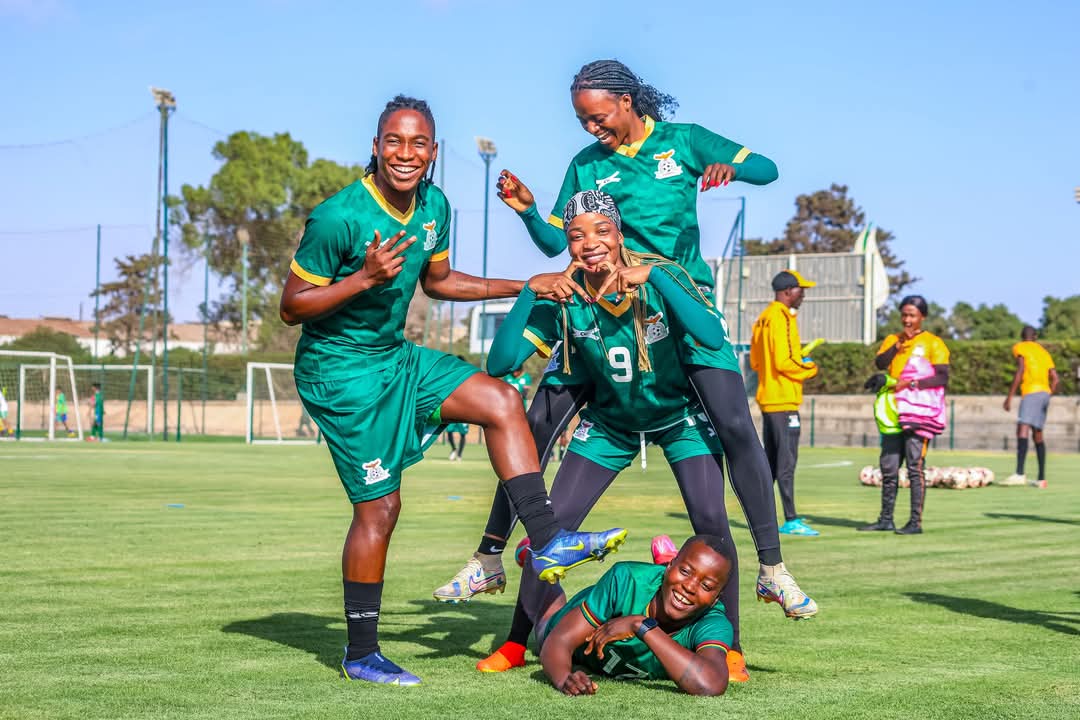
Title image: Team Zambia, WAFCON 2025
Share This Article
If you love this you’ll also love...

Higher Love
It took a 1,454-foot free climb to the top of the Empire State Building to secure an unforgettable proposal. But the arrest is only the latest chapter in Angela Nikolau and Ivan Beerkus' extraordinary love story.
WSL Awards
With the champagne flowing, the dressing-room playlists on the speakers and the entire women’s football pyramid packed into one ballroom, we got the golden ticket to the WSL Football Awards to see what happens when the women’s game gathers under one roof.

Mary, Quite Contrary
Kim Kardashian may have recently swerved Martin Brundle on the Monaco grid, but Mary McGee stopped him in his tracks. As Le Mans returns this weekend, we revisit the life of a motorsport original who raced cars, conquered Baja and made history on two wheels.
Iris Slappendel
Halfway up a mountain at the Tour de France Femmes, it’s not the helicopters circling overhead waiting for the peloton that makes you stop, but a group of women, loud, coordinated, colourful, all chanting one name.