
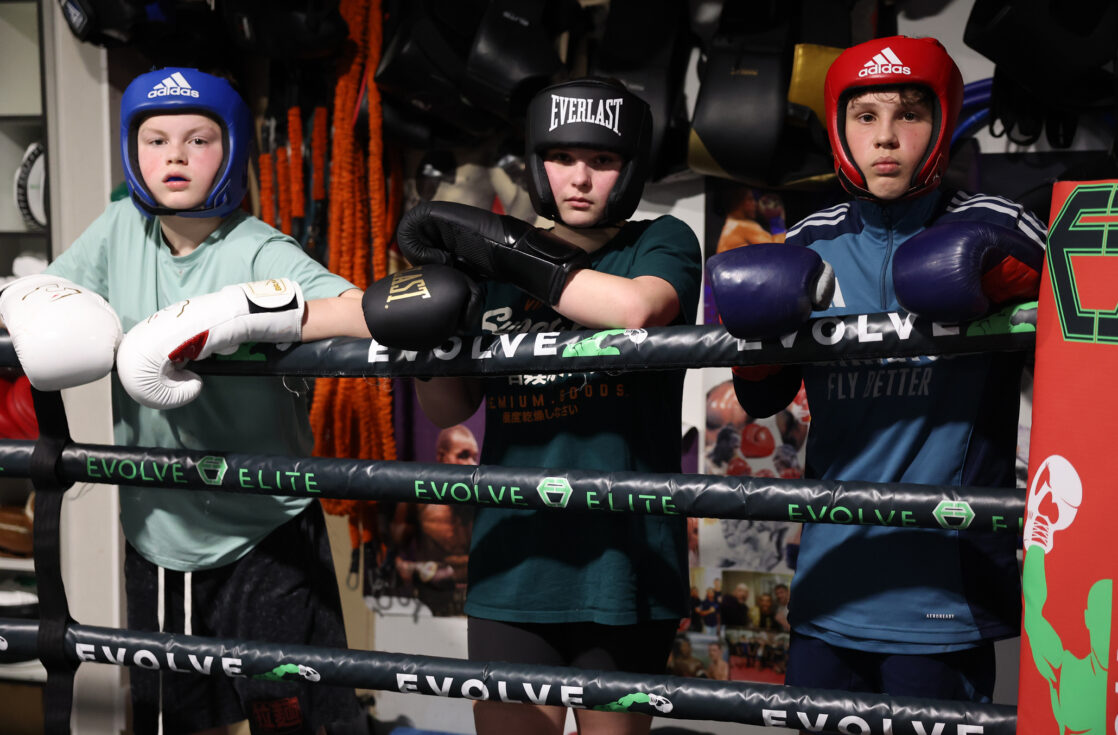
EVOLVE Boxing
Behind a roller shutter on an Amersham industrial estate sits a boxing gym full of young fighters, world-ranked coaches, Pilates mums and two wandering French bulldogs. Evolve Boxing Academy is proof that the best stories in sport rarely live where you expect them.
By Glorious
Photography by Andrew Colebrook
Glorious has been to its fair share of boxing gyms. Under railway arches, behind high streets, in glossy training centres that smell faintly of disinfectant and ambition. And now, it turns out, on an industrial estate in Amersham, Buckinghamshire.

This particular journey begins in Marylebone station at five in the afternoon, standing shoulder to shoulder with the commuter rush and quietly questioning Google’s claim that this is one of London’s calmest stations. Someone insists there is time for coffee. There is not. The result is a slightly chaotic sprint through the concourse with takeaway cups in hand and the Amersham train very nearly leaving without us.
Forty minutes later the carriage has loosened, laptops closed, jackets slung over shoulders, and the view outside has shifted from brick and glass to green.
A short drive from the station drops us into an industrial estate that looks exactly like the sort of place where plumbing supplies, pallets and the occasional forklift live out their working days. Faceless roller shutters. Grey units. Vans reversing carefully into loading bays. The faint sense that everything here has been designed for machinery rather than people.
Except one of these units is not that.
One of them is Evolve Boxing Academy.
Andy Gill is already at the door when we arrive, walking over in a neon Evolve training top and gently trying to steer two overexcited French bulldogs away from our legs while they attempt to greet us with full enthusiasm. Bella and Busta. Busta, Andy explains, is named after Busta Rhymes. Bella exists simply because he likes the way it sounds in Italian. The dogs eventually wander off to investigate something more interesting while Andy, smiling, ushers us inside the gym he first started building years ago in his back garden.
From a back garden to this industrial estate, Evolve grew through word of mouth and stubbornness, a handful of sessions becoming something regular, regular becoming necessary, until the garden simply could not hold what the idea had turned into. The industrial estate unit has been home for nine years now and wears that time comfortably. Downstairs a Pilates class of mums is finishing up, chatting across their mats while the thud of training carries down from above. People drift in and out of the space with the unhurried familiarity of somewhere that stopped feeling like a destination a long time ago and became, for a lot of people, simply part of the week.

Andy had a difficult upbringing and talks about boxing with the matter-of-fact conviction of someone whose relationship with the sport goes well beyond recreation. It gave him discipline and structure when he needed both, and that belief now runs through everything that happens inside the building. Operating as a charity, Evolve provides boxing and fitness training to the local community, reflected in the breadth of people who walk through the door on any given day.
The photo collages of thousands of fighters covering the walls make it clear just how many people now form part of it. “Boxing gyms throughout the country are the hub of the community,” Andy says, describing the role places like this end up playing in the areas around them. “We are social workers, understated and not paid.”
It is also a space where the traditional gender lines of the sport are blurred by design rather than by accident. At Evolve, men and women train side by side, a philosophy that has seen Andy produce a staggering range of talent. He has coached world-ranked professionals and national champions across both the men’s and women’s games, treating every fighter who ducks under the ropes with the same attention and expectation.
One of the earliest female fighters to come through Andy’s gym was Natalia Rok, a Polish boxer who reached the semi-finals of the elite championships while training here. Because she was Polish she could not represent England, but the Polish Olympic team signed her instead. “Since then she’s won seven European titles,” Andy says. “She even won the Worlds beating the England number one.”


For Andy the idea that women should train and fight alongside men has never required much explanation. “I don’t see the difference,” he says. “If a woman wants to box, why can’t she box? Anyone who wants to box, they’re welcome here.”
His partner Ewa Gill moves through the building with the easy authority of someone who knows every corner of the operation. She came to the gym five years ago with no background in boxing whatsoever, her entire relationship with the sport at that point being, she says with a laugh, Rocky films.
Now she leads Pilates sessions downstairs, helps support Andy through the relentless logistics of keeping the place going, and watches the young fighters develop with the specific attentiveness of someone who has seen hundreds of people walk through the door unsure of themselves and leave, over time, considerably less so. “From the first time they come in to when they progress, you see the change in them,” she says. “How much more polite they are. How much confidence they’ve gained.” The structure of training does something to people that is difficult to replicate anywhere else, she thinks.
evolution
The discipline required to show up, to take instruction, to get back up after getting knocked down, translates outward in ways that show up in school reports and family dinners and the way a kid holds themselves walking down the street. Wednesdays have their own particular rhythm, children training upstairs while their mums do Pilates directly below, the whole building operating as a kind of cheerful, organised family chaos that Ewa navigates with considerable composure. Her own sons, she adds without any particular irony, do not always listen to her. They listen to Andy.

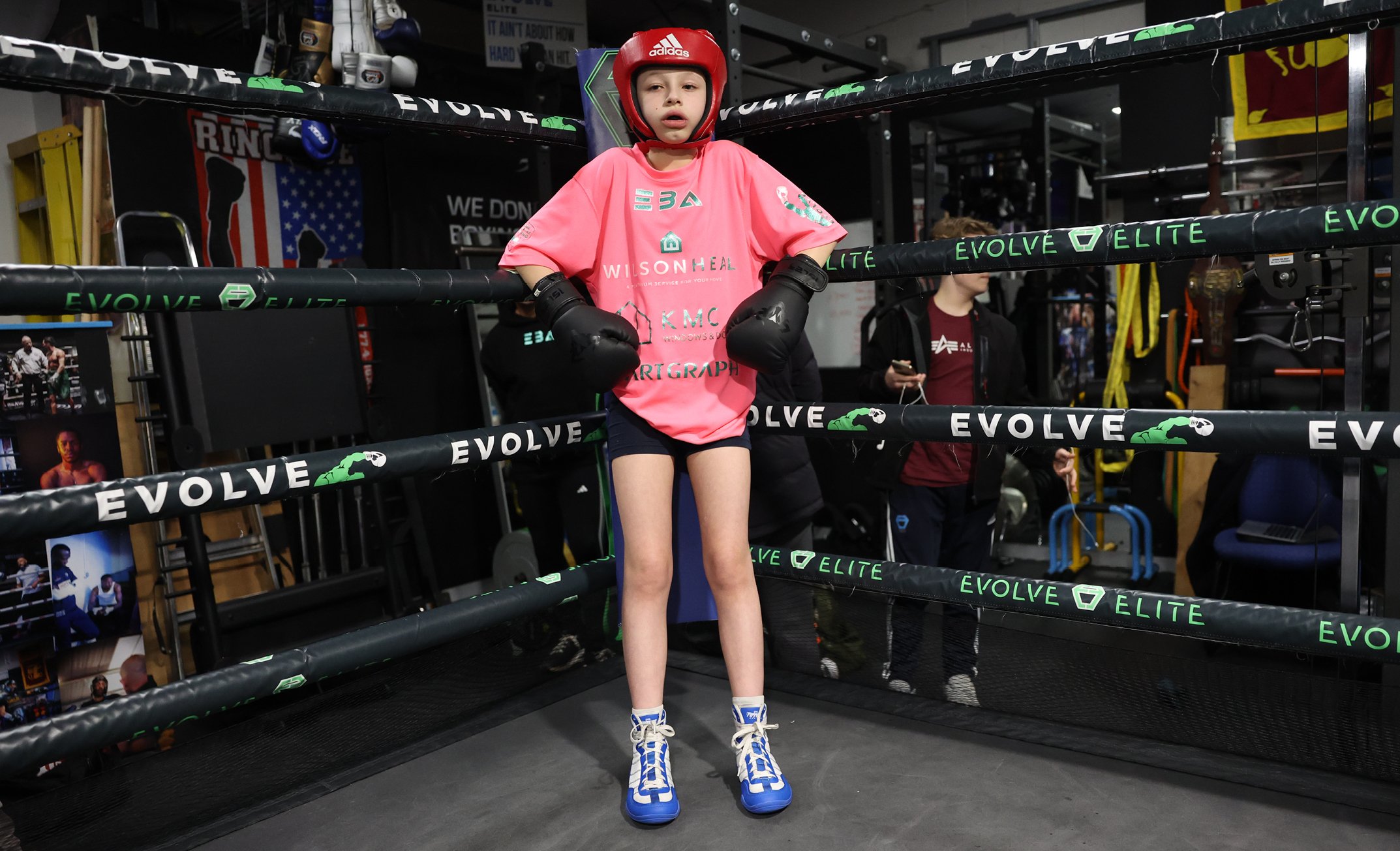
Upstairs the boxing gym earns its atmosphere honestly. A ring sits squarely in the centre of the room, surrounded by bags, scattered gloves, trophies and medals earned across years of competition, and graffiti-style slogans running across the walls in the way that belongs to every boxing gym that has ever taken itself seriously. It is busy and slightly chaotic in the way only genuinely good gyms manage, older fighters helping younger ones without being asked, coaches moving between groups, the energy belonging to everyone in the room rather than to any single session.
Jules Horwood is running a group of younger boxers through footwork drills when we arrive, stepping in to demonstrate and then stepping back to let them try. Outside the gym she works in biomedical research, which gives you some immediate sense of the range of people Evolve tends to collect. Jules first came through the door in 2017 for a women’s BoxFit session, having no background in boxing at all, her sporting life up to that point revolving mostly around horse riding and rugby.

A couple of years later she found herself fighting professionally and ranked eighteenth in the world. “One afternoon I half-jokingly asked Andy whether I should turn professional,” Jules laughs. “He just shrugged and said, ‘yeah, why not.’” Two professional fights later she was undefeated before injuries ended that chapter of her career.
These days she coaches, working with children from seven years old upwards and helping develop the amateur fighters moving through the gym. What she looks for in someone new has nothing to do with natural talent or exceptional fitness. “They don’t have to be the fittest or have all the skills,” she says, watching one of the younger kids finally get the footwork right. “Just someone who is trying to learn.” She has also noticed that girls often pick things up quicker in the early stages, listening, absorbing and implementing, while the boys sometimes take a little longer to get out of their own way.

Glancing across the ring it is easy to see what they mean. A teenage girl is mid-spar with one of the boys, giving him a proper run for his money, her combinations sharp and her footwork unhurried. He is working hard to keep up. Nobody watching seems to think this is remarkable, which is perhaps the most remarkable thing about it.
The shift Jules has watched happen in women’s boxing over those eight years is something she talks about with satisfaction. When she first arrived at Evolve she was often the only woman training, and she still remembers coaches from visiting gyms watching her spar and registering their scepticism in ways they did not bother to hide, that old-school mentality that women in a boxing ring was somehow not quite right, not quite serious, not quite the real thing.
“That’s definitely going now,” she says.
Women headline professional cards. There is a visible pathway from amateur boxing to a professional career that simply did not feel available to young girls a decade ago, a world in which the sport can be a genuine ambition rather than something you fell into because your brother did it first. That visibility changes things. A girl training here can go home, turn on Netflix or scroll through TikTok, and see women fighting on major cards. She can recognise something that belongs to her, rather than something she is borrowing from a sport still making up its mind about whether to let her stay.

Harriet Brennan, who coaches at The Barn Boxing Club alongside running personal training and online coaching, knows that landscape intimately. She competed under England Boxing for years and reached the Development National Finals, where her opponent was Ramla Ali. Ali stopped her in the second round, though Harriet tells it with a laugh because they have been close friends ever since and she later went to train alongside Ali specifically to get better. The movement Ramla has built goes well beyond the sport itself, Harriet thinks.
“She’s a Muslim, Somali woman. The opportunities she’s opening, not just for women who could box but for their families and their communities, making it more acceptable that they’d let their daughters or sisters box, is so cool.” The cultural permission that visible role models create is something Harriet feels with real urgency, both as a coach and as someone who came up when that permission was considerably harder to find. You need to see someone who looks like you already doing it, she says.

It rewrites what a twelve-year-old thinks is possible. Harriet has also watched the perception of women’s boxing shift stylistically in ways she finds genuinely exciting. For years the women’s game was associated primarily with technical precision and careful craft, which was both true and admirable but somehow used to hold it at a slight remove from the mainstream, as though skill was a consolation prize for not being the real show.
That framing is collapsing. Female fighters are coming through who knock people out, who move with aggression and ferocity, who do not box as though they are still trying to justify their presence in the room. The sport looks different because it is different, and the rooms where that change begins look, at least in part, like this one.
Community


Eleven-year-old Lailah Jimenez trains here four times a week and talks about the gym with the total certainty of someone for whom the place has already become load-bearing. “It feels like my second family and my home,” she says, watching a sparring session from across the ring. Her younger sister Emilia, who is eight, attends the Monday junior class, sits next to her doing her colouring in, glancing up at the older fighters with an expression that suggests she’s absorbing considerably more than she’s letting on. Their mother Kayleigh has watched the transformation in Lailah with the particular satisfaction of a parent who suspected the gym was doing something important before she could fully articulate what.
The nervous, uncertain girl who first walked in has become someone grounded and streetwise, with the frustrations of growing up finding somewhere constructive to go. “It’s massively improved her confidence,” Kayleigh says. She adds that she was hesitant at first about her daughter boxing, but now when she sees Lailah stepping into the ring and training with boys already a foot taller than her, she finds herself worrying for them instead. She recently filled out a school form asking Lailah to name her future occupation. Professional boxer, Lailah wrote, without hesitation.

inspiring
Nearby, fourteen-year-old Anastasiia finishes a combination and shakes out her hands. She moved to the UK from Ukraine four years ago after her family fled the conflict, and adjusting to life in a new country has been harder for her than for her younger sisters, one of whom has already developed what Anastasiia describes, with a mixture of affection and mild exasperation, ‘a full British accent’. English is still something she works at. The gym offered something different, a place where fluency was not a condition of entry. “Boxing is the one where you don’t need to talk,” she says with a small laugh. “You can just train.” She mentions Lailah as one of the first people who made her feel welcome.


Fifteen-year-old Nell Jordan, who has been going to The Barn Boxing Club for just over a year and trains three times a week plus circuits, found something similar in the gym even without crossing a border to get here. The friends she has made exist entirely outside school, which at fifteen carries its own distinct value, and she talks about her coaches Tom and Harriet with the easy warmth of someone who knows she is genuinely looked after. “It always gives me something to look forward to,” she says. Coming here, seeing the same people, doing the work. The simplicity of it is the point.

Harriet runs holiday clubs at the gym for children who have never boxed before, and says the difference between those kids and the regular Evolve fighters becomes obvious quickly. The boxers carry themselves differently, at home in rooms that might otherwise feel intimidating. “They have the confidence to speak to anybody,” she says. “It doesn’t matter who it is.” Andy would call this simply what boxing gyms do. He is right, and also, as is becoming something of a pattern, significantly underselling it.


By the time the evening sessions are building speed the building is fully alive, bags swinging, gloves cracking against pads, laughter drifting up through the floor from the parents waiting to pick up their kids. Busta and Bella are doing another circuit of the space with the proprietorial calm of animals who have decided this is entirely their gym and everyone else is a guest. Outside, the industrial estate is quietly closing down for the evening. Inside, an eleven-year-old is learning to jab, a biomedical researcher is coaching footwork, a teenager who crossed a border four years ago is finding her feet in a language that needs no translation, and a woman who once fought Ramla Ali is teaching girls that the ring is theirs if they want it. Andy would call this an ordinary Wednesday. From where we are standing, it looks like anything but.

More info about Evolve Boxing Academy here.
Editorial Design ThisIsRoot
Share This Article
If you love this you’ll also love...
Textured Waves
Chelsea Woody is a surfer, registered nurse, filmmaker and co-founder of Textured Waves. From challenging representation in surfing to raising awareness of maternal health, she's using the ocean as a platform for change.
Believe...
Ted Lasso is back, but this time Ted has a new team, a smaller budget and a much bigger problem. Before Richmond’s Lady Greyhounds can worry about winning, they have to face the realities of women’s football. Season 4 steps straight into the worlds of investment, culture and the challenge of building a team from the ground up.
WAFCON 2026
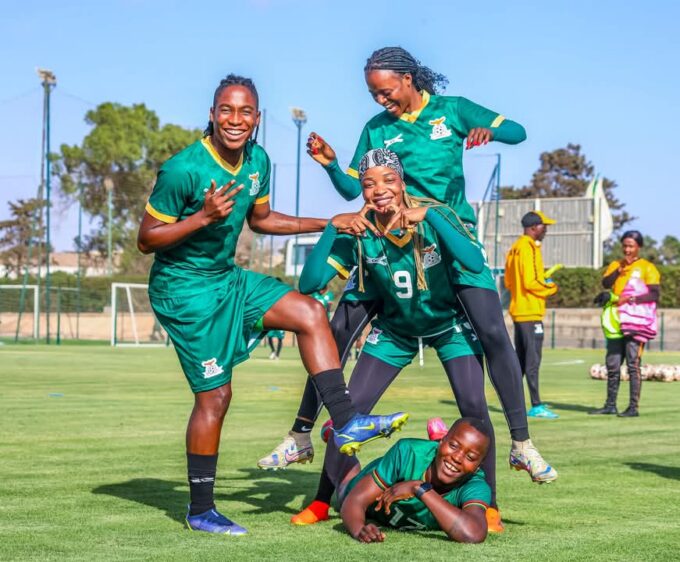
There was a time when WAFCON introduced the world to Africa's brightest footballers. Today, many arrive in Morocco as established stars. The tournament hasn't become less important because of that. If anything, it has become even more fascinating.
On Tour
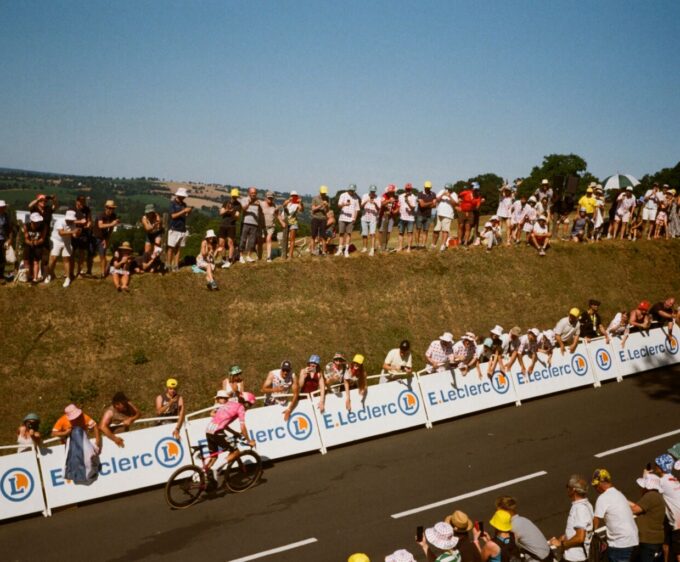
With the Tour de Femmes 2026 about to be in full swing, I spent part of last summer at the Tour de France to understand why that race still holds such a colossal place in cycling culture, and to imagine what the future could look like for women’s competitive cycling.
This week’s exclusive offers

Film Club
From boxing rings to skate parks, here are eight films that put women at the centre of sport.

Digital Detox
We're exploring why putting your phone away can transform your holiday
Glorious Travel
Because the best souvenirs don't fit in your suitcase...

Binge-worthy Pods
Billie Jean King thinks whattt? Roald Dahl was a spy?! Should you actually worry about that health thing TikTok swears is dangerous? Here are the eight podcasts currently hijacking Team Glorious’ brains, headphones and studio debates.