Milano Cortina 2026: Your Guide
The most geographically ambitious Winter Games in history are under way! From Milan’s ice rinks and art institutions to the Dolomites’ snow-covered slopes, this is your complete guide to Milano Cortina 2026, whether you’re travelling to Italy or watching from home.
By Glorious
Ladies and gentlemen, winter sports season has officially hit full throttle!
The 2026 Winter Olympics are happening across northern Italy, and this edition isn’t just back after a pause, it’s been properly reinvented. Milano Cortina 2026 marks the first Winter Games officially co-hosted by two cities, with events stretching from the urban energy of Milan to the snowy peaks of Cortina d’Ampezzo, and into valleys and mountain resorts including Livigno, Bormio, Anterselva and Val di Fiemme.
The competition runs from 6 to 22 February 2026 and is a full-on sprawling, Italian-style celebration of sport, heritage and hospitality that genuinely rewrites how the Winter Olympics are experienced.
What and Where
This year’s Games feature 116 medal events across 16 sports, bringing the best ice and snow athletes from around the world to battle for gold. You’ll see everything from alpine skiing and biathlon to figure skating, short track and curling, alongside the Olympic debut of ski mountaineering, a discipline rooted in mountain endurance and long part of Alpine culture.
Milan acts as the urban anchor, hosting the opening and closing ceremonies at San Siro Stadium and several major ice sports at venues including the Ice Park at Rho Fiera and the Unipol Forum. The mountain events take place across long-established winter destinations in Lombardy, Veneto and Trentino-Alto Adige. Cortina d’Ampezzo stages curling, sliding sports, women’s alpine skiing and biathlon, framed by dramatic Dolomite peaks. Livigno hosts freestyle skiing and snowboarding, whilst nearby Bormio takes on men’s alpine skiing on the famed Stelvio course. Nordic events such as ski jumping and cross-country skiing are based in Val di Fiemme and Predazzo, areas with deep roots in those disciplines.
That decision to use existing venues rather than purpose-built Olympic parks was central to Italy’s winning bid. Rather than constructing a single Olympic bubble, organisers opted for a cluster model that integrates the Games into places that already live and breathe winter sport. It’s one of the most ambitious geographic spreads in Winter Olympic history, and a clear signal of how future Games may look.

A Brief History
Italy’s relationship with the Winter Olympics stretches back nearly seventy years. Cortina d’Ampezzo hosted the Games in 1956, a landmark edition that helped bring winter sport to television audiences across Europe. Turin followed in 2006, cementing Italy’s reputation for blending elite sport with city life, culture and food. Italy also hosted the Summer Olympics in Rome in 1960.
Milano Cortina 2026 builds on that legacy but changes the format entirely. The theme is Harmony, reflecting the ambition to unite different landscapes and communities into a single celebration. For the first time in Olympic history, there are two Olympic flame cauldrons, one at Milan’s Arco della Pace and another in central Cortina, both lit during the opening ceremony and burning throughout the Games.

If You’re Going: Milan
Milan has slipped into Olympic host mode with the sort of confidence you’d expect from a city that knows how to handle big moments. The build-up feels celebratory rather than overwhelming. Espresso bars buzz with speculation about medal chances, and arrival points like Milano Centrale and Malpensa Airport are dressed for the occasion, the former glowing in Italy’s national colours, the latter featuring striking portraits by photographer Steve McCurry.
For coffee, step away from the most obvious tourist routes. Navigli remains a reliable choice for excellent espresso and relaxed evenings by the canals, whilst Brera offers classic café culture in a more polished setting. During the Games, that everyday ritual is also reflected on an official level. Caffè Vergnano, one of Italy’s oldest coffee roasters, is the Official Coffee of Milano Cortina 2026 and is being served across Olympic venues and fan areas, placing espresso culture firmly at the heart of the spectator experience. If you’re after something Olympic-themed to take home, Bialetti has released an official Milano Cortina 2026 Moka Express, styled in the Games’ colours and designed by Look of the Games director Raffaella Paniè and her team.

buzzing

YesMilano’s official city pin collection celebrates Milan’s neighbourhoods and landmarks, from the Duomo to San Siro, and both have become quiet cult hits. The pins have already sold out once, with restocks flying off the shelves, and come Games time they’ll be available at cultural venues, shops and newsstands across the very districts that inspired them.
Art and design sit naturally alongside the sport. The Pinacoteca di Brera is an easy cultural anchor in the historic centre, whilst Fondazione Prada delivers contemporary programming within reach of Olympic venues. Fashion fans will gravitate towards the Quadrilatero della Moda, which during the Games doubles as an unofficial athlete-spotting zone. Milan’s Olympic Village, built on the former Porta Romana railyard and designed by Skidmore, Owings & Merrill, has been designed with post-Games life in mind. The approximately 1,700 beds currently housing athletes will be converted into student accommodation for the 2026/2027 academic year. Two historic buildings, famously captured by Italian photographer Gabriele Basilico in his 1981 book Milan: Portraits of Factories, currently serve as the Olympic dining hall and will be converted into food courts and restaurants. The wider site, until recently a derelict industrial area, is being transformed into a vibrant emerging neighbourhood, making it one of the clearer examples of long-term Olympic legacy planning actually being delivered rather than promised.
Stage lovers should note that two Olympic-inspired performances are part of the Cultural Olympiad. At Teatro Lirico Gaber, The Orobea Games is a modern-day opera conceived by the Antonio Vivaldi Orchestra from Valtellina. First Love at Piccolo Teatro is a blend of autobiography, fiction, dance and theatre, recounting one of the most famous competitions faced by Olympic gold medallist Stefania Belmondo.

If You’re Going: Cortina d’Ampezzo
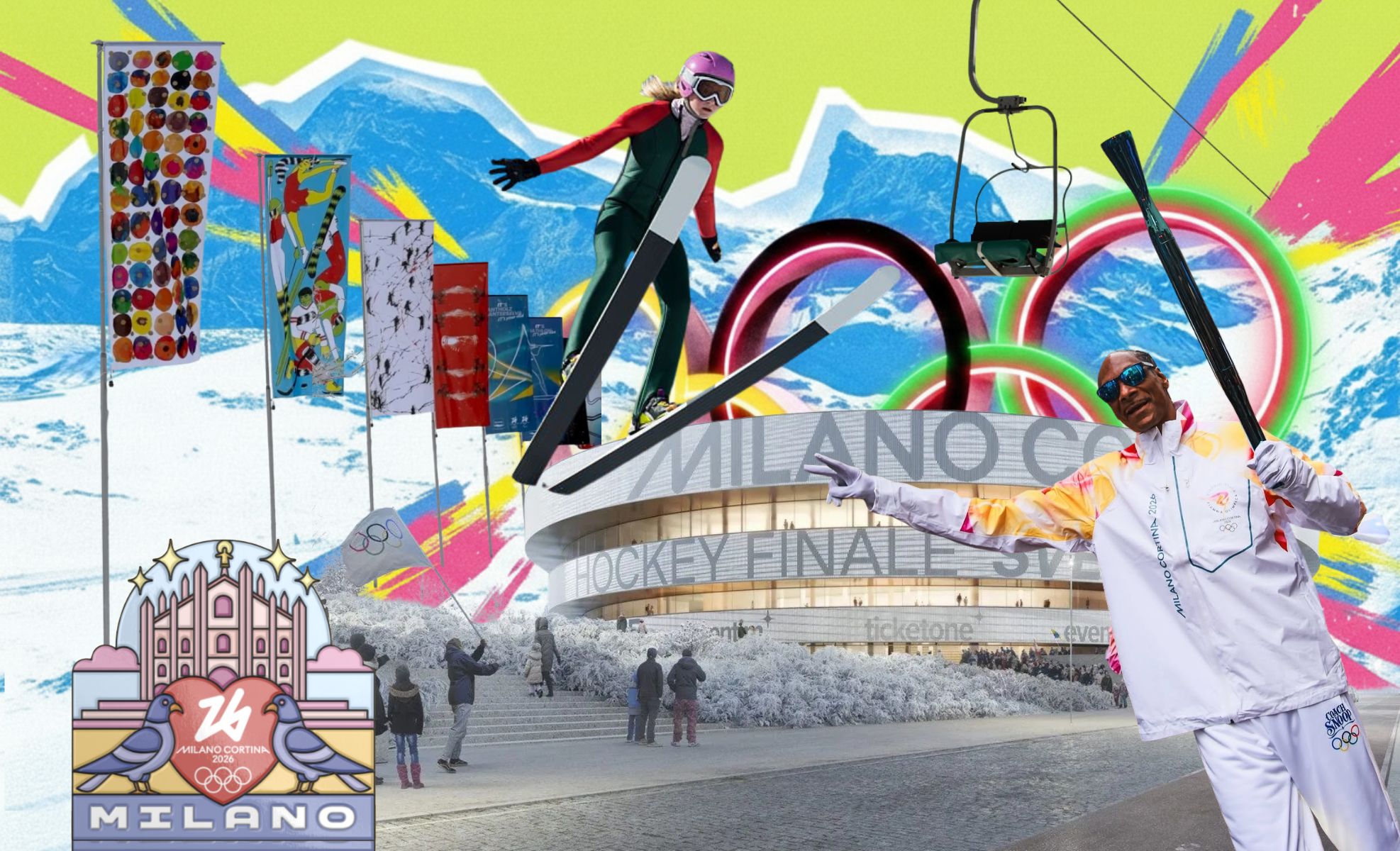
Cortina offers the Alpine counterpoint to Milan’s urban buzz. The town centre features a giant countdown clock, whilst fifteen Olympic-themed flags by contemporary artists mark the valley entrance at Antholz-Anterselva. Corso Italia becomes the natural meeting place between events, coffee stops and long lunches.
The surrounding Dolomite landscape does much of the heavy lifting. Even without skis, winter walks around Lake Misurina or views of the Cinque Torri deliver that unmistakable Winter Games atmosphere. On competition days, Cortina balances high-stakes sport with the unhurried rhythm of a resort town that has hosted the world before and knows exactly how to do it.


If You’re Snuggling Up on the Sofa
Watching from home is very much part of the Milano Cortina 2026 experience. In the UK, rights are held by TNT Sports and Discovery+, offering extensive live coverage across all sports, while the BBC provides free-to-air broadcasts of major events, plus highlights and additional streams via BBC iPlayer and BBC Sport. In the United States, coverage is led by NBC and Peacock, with NBC showing key moments live and in primetime and Peacock streaming the full competition schedule.
For schedules, where to watch, results and live updates, the official Milano Cortina 2026 hub is the most reliable place to follow the action as it moves between cities, valleys and mountain venues. These Games were never designed to sit inside a single Olympic bubble. They unfold across real cities and real mountain towns, where elite sport runs alongside everyday life, from espresso bars and fashion districts to Alpine resorts. Whether you are watching from home or following along from afar, Milano Cortina 2026 is an Olympics shaped as much by place and culture as by medals.
Where’s are you heading? What have we missed?
Spill your Italian secrets with us on social @glorioussport
Safe travels xxx
Share This Article
If you love this you’ll also love...
Cold Kits
Before a single ski leaves a track or a bobsled hurtles down the run, Milano Cortina 2026 has already crowned its fashion winners. Here's our definitive ranking of who's winning before the competition even starts.
Sky Dancer
"Being the only woman in the room can be a disadvantage or a superpower. You get to choose." From the grease of a diesel workshop to high-stakes ‘half-pipes’ in the sky, Emma McDonald, the sole female competitor in Air Race X, is redefining what it means to be a pilot.
Kit Couture
Get ready for more than just breathtaking performances at the Summer Games. We take a look at the national kits that are turning heads (and a few that might leave you scratching yours!).