THE MET GALA: The First Monday In May
Fashion has finally stopped pretending sport is just a reference. On the Met Gala steps, the crossover looked less like a trend and more like the industry’s new order, as the worlds of fashion and sport moved beyond flirtation and into full commercial, cultural and creative alignment.
By Glorious
The Met Gala has never been a crystal ball. It is more like fashion’s grand, glittering receipt. By the time something appears on those steps, on the first Monday in May, the idea has usually been circling the industry for months, sometimes years, waiting for the right dress code, the right sponsor, the right famous person and the right photograph. This year, the theme was Costume Art, with the official dress code Fashion is Art, and yet the clearest story of the night was not really about art at all. It was about sport.

Two years ago, Glorious Sport predicted that the Met Gala would have a sports theme within five years. Three years remain on the clock, but after 2026 it no longer feels like a wild punt from the back of the room. It feels like something fashion is slowly, expensively, and quite obviously dressing itself towards.

The night itself was not exactly electric. The theme landed neatly rather than thrillingly, the usual celebrity machinery whirred into place, and the carpet had to do its work against the unmistakable backdrop of Jeff and Lauren Sánchez Bezos as honorary chairs. Their reported ten-million-dollar sponsorship had drawn weeks of public pushback, with “Boycott the Bezos Met Ball” projections appearing on buildings across New York, Zendaya and Meryl Streep both declining their invitations, and Zohran Mamdani, the new Mayor, sitting it out on principle. There was a corporate flatness sitting under the proceedings that even the best dressing struggled to disguise. But look at who actually gave the carpet its charge. Venus Williams was there as co-chair. Naomi Osaka returned four years after her own 2021 co-chair stint. Serena Williams arrived in Marc Jacobs. Angel Reese, A’ja Wilson and Paige Bueckers brought basketball’s cultural rise up the steps. Eileen Gu, Lindsey Vonn and Alysa Liu carried winter sport into the room with the easy confidence of women who have already performed under far brighter pressure.
corporate

These were not token athlete invites scattered across a celebrity guest list. They were some of the most culturally relevant women in the room.
Venus’s Swarovski look, designed by Giovanna Engelbert, drew from Robert Pruitt’s 2022 portrait of her and folded in references to tennis, family and legacy. It was not an athlete being dressed up as a fashion person. It was a fashion house borrowing the language of an athlete’s life and admitting, quite beautifully, that the life was the point.

Anna Wintour has understood this for years. She stepped back from American Vogue last year but kept the only seat she has never planned to vacate, and she has been placing sport close to fashion’s centre for the better part of a decade. Tennis is her particular weakness, a long-documented devotion that has cost her the occasional Paris show and turned her into a near-permanent fixture at the US Open and Wimbledon, her Federer obsession the most cited example. Serena co-chaired in 2019. Osaka co-chaired in 2021. Roger Federer co-chaired in 2023. Lewis Hamilton co-chaired last year, the same season LeBron James was named honorary chair, making the 2025 Superfine Met the sportiest the institution had ever staged. In between all of that came gymnast Nia Dennis, literally backflipping across the Met steps in adidas by Stella McCartney during the 2021 gala, turning the carpet itself into a performance space. 2026 had fewer athletes overall, but the women carried it. 2026 had fewer athletes overall, but the women carried it.
So no, 2026 did not come out of nowhere. It arrived after several seasons of fashion openly raiding the sports cupboard and finding far more than a varsity stripe.

In October, Glorious Sport ran The Long Game, arguing that fashion and sport had moved beyond flirtation and into full structural entanglement. That piece traced the SS26 runways, where Christian Louboutin turned a Paris show into an American football spectacle, Off-White staged its presentation on a rooftop basketball court, and sport stopped being a moodboard and became the actual staging.
That is the real shift. Fashion has always loved sport when it could turn it into a look. Tennis whites, rugby collars, riding boots, track jackets, polo shirts, boxing shorts, ballet flats, all of it has been borrowed, polished and sold back to us many times over. What feels different now is that sport is no longer just providing the silhouette. It is providing the cast, the story, the audience and the credibility.

That credibility is gold dust. A model can wear a basketball-inspired gown beautifully. Angel Reese can wear one and bring the entire history of her body, her league, her fanbase, her ambition and her internet fluency with her. Paige Bueckers can stand in Coach and make the outfit feel less like styling and more like proof of arrival. The WNBA is no longer asking for cultural space politely. It is taking it, selling it and looking extremely good while doing so.
The commercial case is not subtle. Deloitte forecasts elite women’s sport revenue to reach at least US$3 billion in 2026, up 25 per cent on 2025 and 340 per cent since 2022. SKIMS has been the official underwear partner of the NBA, WNBA and USA Basketball since 2023, which tells you exactly where lifestyle brands now see scale, heat and cultural usefulness. Alysa Liu being announced as a Louis Vuitton House Ambassador hours before her Met Gala debut is not a cute coincidence. It is the machine working properly.
There is also something happening around the body itself, though not in the boring “strong is the new skinny” way that gets wheeled out every few years and immediately makes everyone want to lie down. The more interesting point is that younger audiences are fluent in movement. They understand athletes as people with style, politics, humour, routine, discipline and platforms of their own. They do not need sport translated into glamour before they take it seriously. They already see glamour in performance.
Fashion needs that because fantasy alone has started to look a bit thin. Sport gives fashion friction. It gives it sweat, risk, skill, stakes and a live audience that actually cares what happens next. Fashion gives sport a different kind of stage, one where athletes can be read as cultural figures rather than simply winners and losers. Together, they create the thing every brand is currently chasing: a world people want to enter.


That is why the Met felt important even when the night itself felt slightly flat. The athletes gave it a reason to pay attention. Venus brought legacy. Naomi brought theatre. Serena brought icon status. Angel, A’ja and Paige brought basketball’s present tense. Eileen, Lindsey and Alysa brought the Olympic winter into fashion’s warmest room. Almost all of them were women, and that was the point hiding in plain sight.
Three years remain on Glorious’s prediction, but the signs are everywhere now. The runway has already staged the games. The brands are already writing the cheques. The athletes are already fronting campaigns, co-designing collections and commanding carpets that once treated sport as a novelty guest.
Fashion and sport have always borrowed from each other. Now they need each other. And if the Met Gala is fashion’s most theatrical receipt, 2026 came itemised.
Share This Article
If you love this you’ll also love...
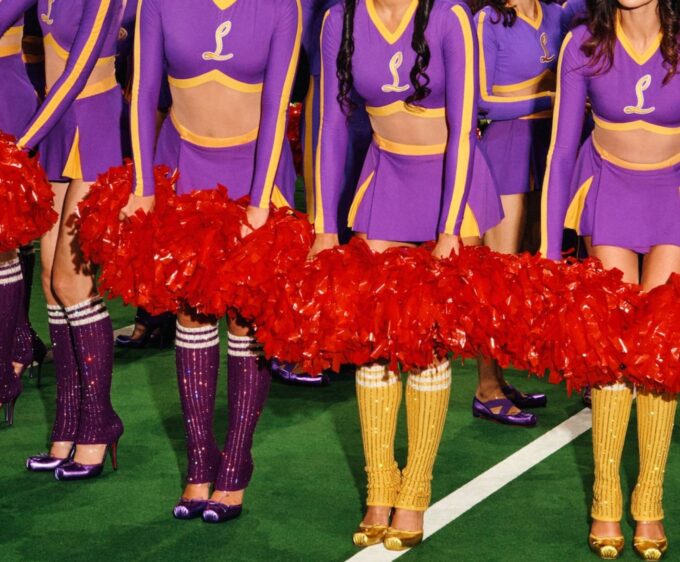
The Long Game
Fashion and sport have always flirted, trading looks and stealing from each other’s wardrobes, but this season feels different. The flirtation is over. They’ve finally tied the knot, creating a power couple built on ambition, imagination and reach.
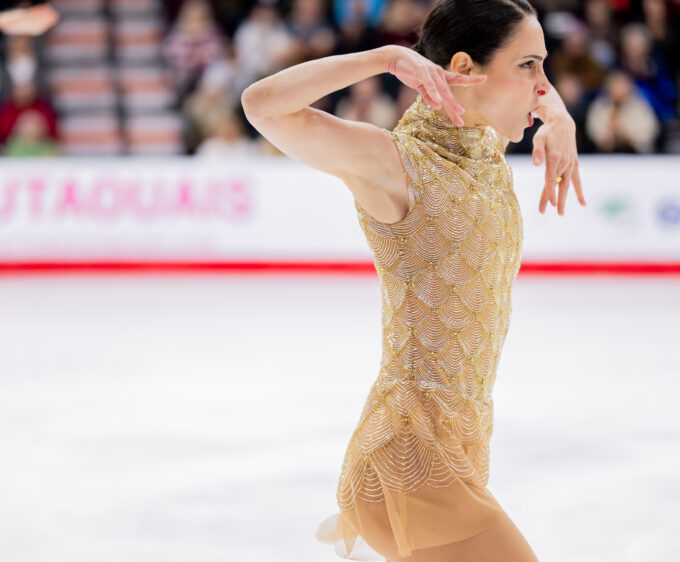
Cold Couture
Six hundred and sixty hours of hand-beading, one lost FedEx package, a tribute to the Spice Girls and a $100,000 Oscar de la Renta dress. Figure skating just had its most fashionable Winter Games ever.
Beyond The Hype
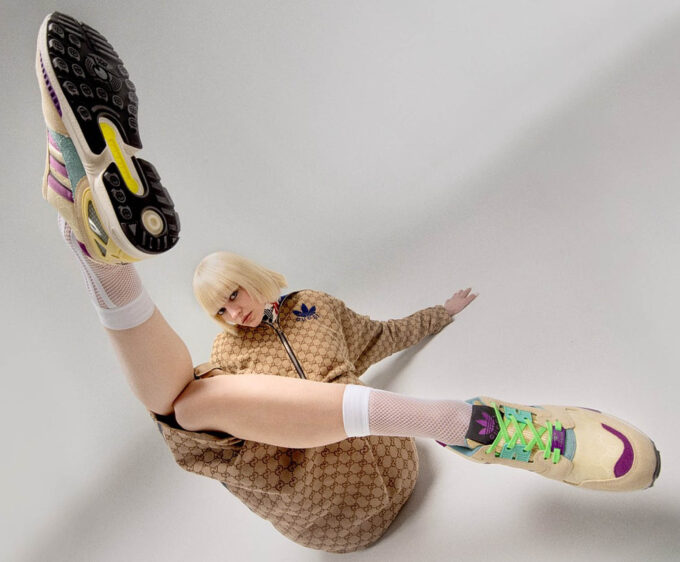
From CDG x Salomon to Jacquemus x Nike, luxury fashion and sportswear collaborations are everywhere. We investigate the reasons behind this ever-booming trend.

Cold Kits
Before a single ski leaves a track or a bobsled hurtles down the run, Milano Cortina 2026 has already crowned its fashion winners. Here's our definitive ranking of who's winning before the competition even starts.