I Accidentally Discovered Sporting ASMR
Curling might be the most underrated spectator sport on earth. Here's why one woman thinks everyone with an overactive brain should be watching it.
By Leila Haddad
I do sport, sometimes enthusiastically, sometimes out of guilt. Pilates when my body feels tight. Running when my conscience gets loud. One marathon that nearly finished me off. I move. I sweat. I tick the box.
But watching sport? No. Not really. Sitting down to watch sport on a screen has never felt instinctive. The US Open if it’s on in the background. The Super Bowl earlier this week, because wings are excellent and because Bad Bunny headlined the halftime show in a riot of sound and colour that felt like a cultural moment the world was briefly locked into together.
And then there is the Winter Olympics unfolding in Italy. Milano Cortina hosting snowboarding, speed skating, ski jumping, alpine events, arenas full of big air and big noise. Big moments, big crowds, big reactions. Sport designed to be loud, fast and overwhelming in the way global spectacle tends to be.
But then there is curling.
Throw. Sweep. Shout. Watch. Silence.

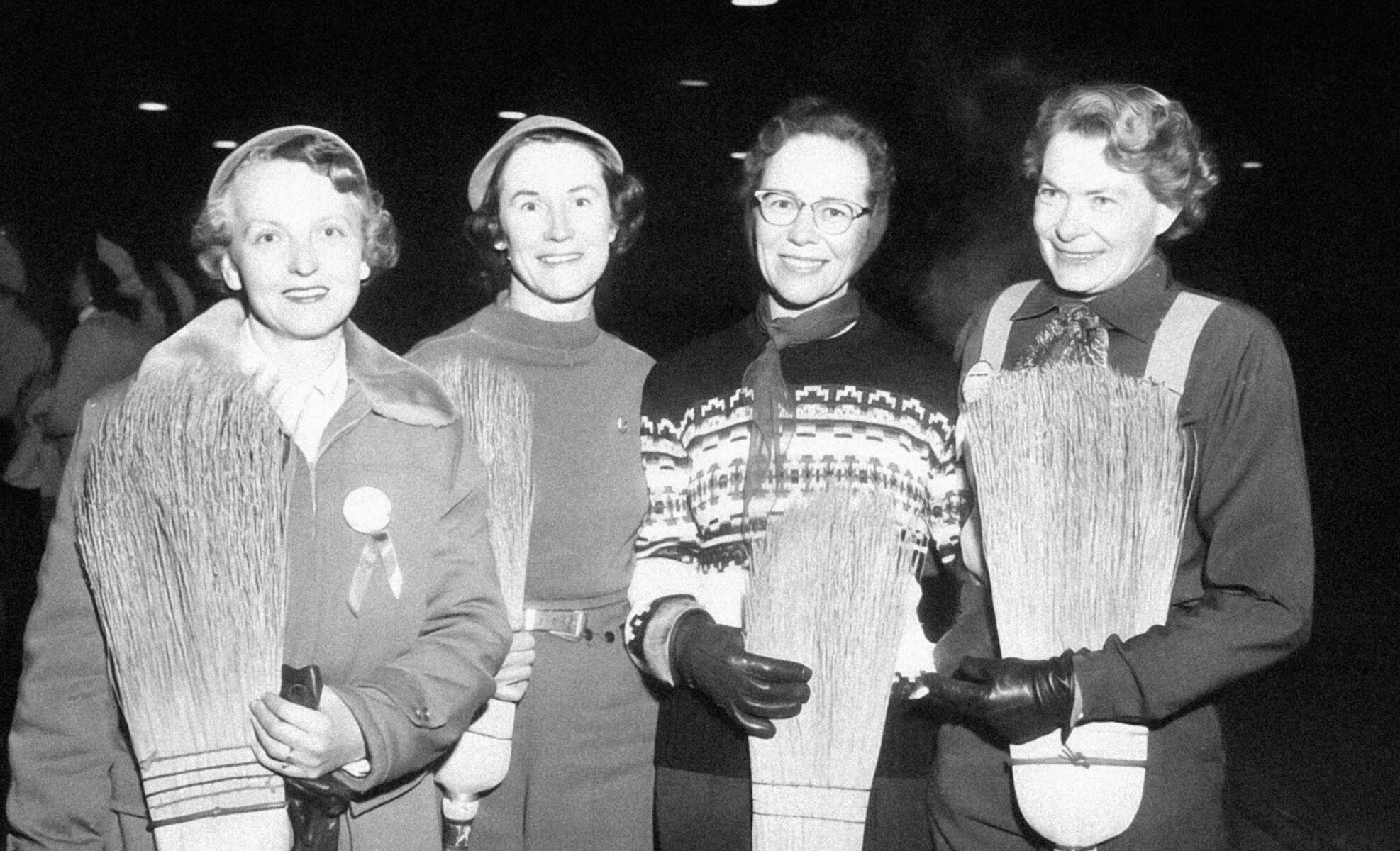
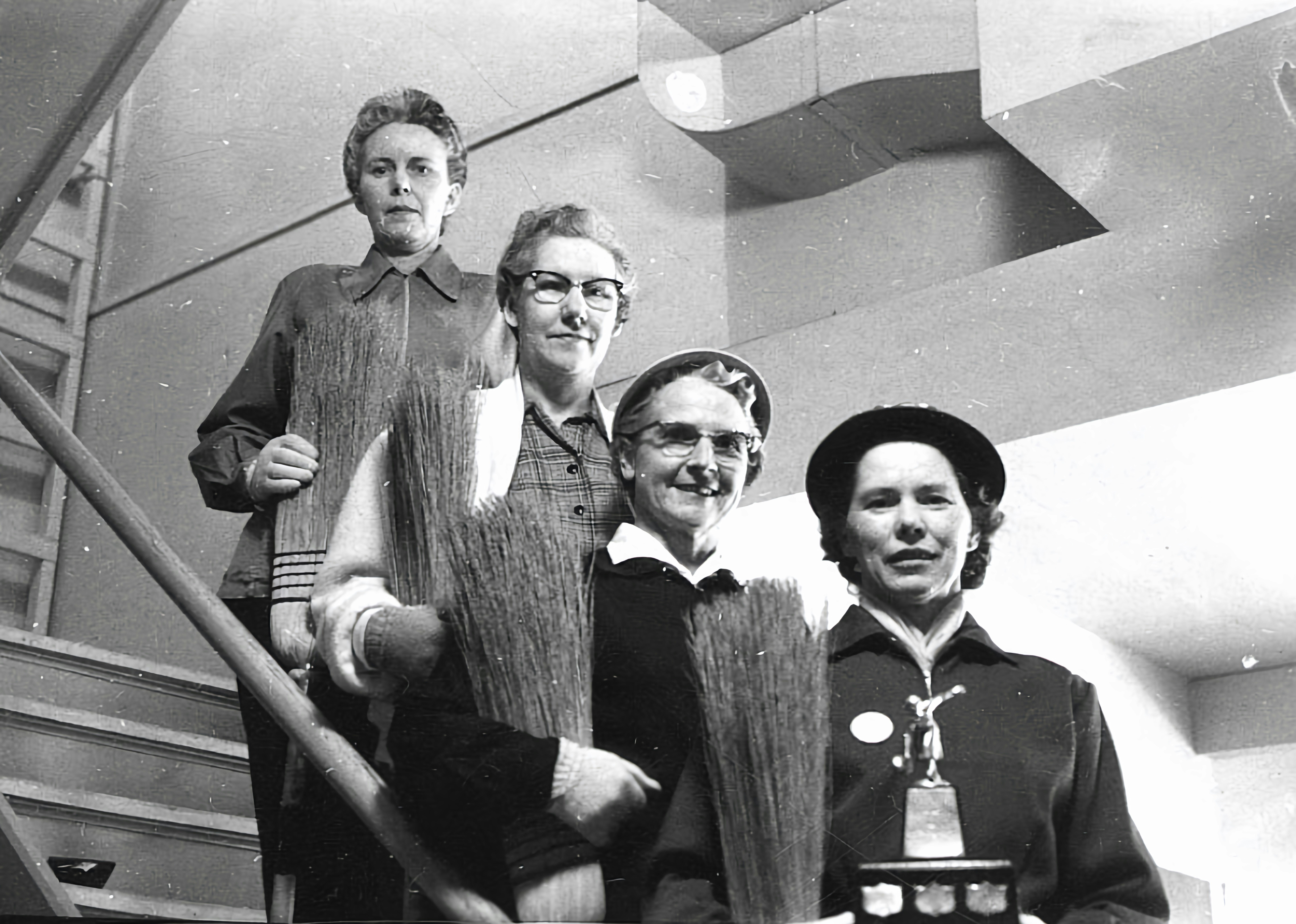
Women have been part of curling for far longer than the sport’s television footprint suggests. While curling itself traces back to Scotland in the 16th century, women were playing organised games by the late 19th and early 20th centuries, particularly in Canada and Scandinavia, often on frozen lakes rather than indoor rinks. Archival photographs from Norway show women curling outdoors in the 1930s, bundled against the cold, stones sliding across natural ice. In Canada, women’s teams were active in provinces like Alberta by the early 1900s, using household brooms rather than the purpose-built equipment that exists today. Competitive structures arrived slowly. The first official Women’s World Curling Championship was held in 1979, and women’s curling did not become an Olympic medal sport until 1998 in Nagano. For much of its history, the women’s game existed in parallel rather than in spotlight, sustained by communities rather than broadcasts, long before it was considered elite or televised.
Curling was not a sport I grew up with, nor one I sought out. It arrived by accident, late at night, when sleep was not happening and my brain was doing that familiar, unhelpful thing of replaying everything at once. Anxiety sat heavily in my body at the time, the kind that turns up around 3am with a tight chest and no obvious cause.
People suggested meditation apps. I tried them and failed quickly. The silence felt hostile. The soothing voices only made me more aware of how awake I was. That night, flicking through channels without thinking, I landed on a curling match.
I watched for three hours. Hypnotised as my shoulders dropped and my jaw unclenched. I slept properly for the first time in weeks.
Don’t get me wrong, I filed it away as one of those quiet discoveries and didn’t suddenly become a curling superfan. It just lodged itself somewhere. Over time, I realised I kept drifting back to it, almost without thinking, when things felt overwhelming or when my brain refused to switch off. Sometimes I forget about it entirely, then rediscover it during another Olympics or a random championship and remember why it works. My partner does not understand this at all. He watches basketball and comes away visibly more stressed than when he started, shouting at the screen as his blood pressure climbs.Meanwhile I am lounged on the sofa, eyes half open, quietly transfixed, watching people slide, sweep and shuffle across the ice, completely calm, often at unreasonable hours.

Modern life rarely offers rhythm. Everything arrives at once and keeps arriving. Notifications, tabs, messages, updates. Curling moves at a pace your nervous system can actually follow. It asks for attention, but never all of it at once.
The soundscape does a lot of the work. The low rumble of stone on pebbled ice. The urgent swish of brushes. The sudden quiet when they stop. Occasionally the soft tap of stones colliding. It is satisfying not because it is dull, but because it is legible. Your brain always knows where it is.
This is where the ASMR comparison starts to make sense, even if it sounds faintly ridiculous. Like those videos of people completing careful, repetitive tasks, curling is built on precision and repetition. The difference is that this is a real sport, with real athletic demand and real consequences. Strategy, strength and touch all matter, even if they reveal themselves slowly.
That slowness is part of why people assume curling is silent. It isn’t. It is full of noise, just not the kind we usually associate with elite sport. It is not crowd-led or broadcast-led or built for highlight reels. The sound comes from the ice itself and from the people playing the game, arriving in bursts, then disappearing entirely.
That rhythm is the point.
At its simplest, two teams try to place their stones closer to the centre of the target, known as the house, than the other team. The very centre is the button. Games are divided into ends, usually eight or ten at championship level. Each team throws eight stones per end. Once a stone is released, teammates sweep the ice in front of it, briefly warming the surface so the stone travels further and curls less. The rotation applied at release causes the stone to curve as it slows.
There is depth here. The hammer, or last stone advantage, can decide entire games. Teams will sometimes deliberately score no points in an end to keep it for the next. The free guard zone limits early takeouts and forces more creative play. Decisions are tactical and often made in seconds, but the consequences unfold slowly enough that you can actually follow the logic.
This is why curling works when faster sports don’t. Basketball, football, ice hockey all demand that your brain tracks too much, too quickly. Curling gives you time to understand what is happening before the next thing begins. Engagement without overload.
Only then does the elite end of the sport fully reveal itself.

As you’re reading this, the women’s tournament at Milano Cortina is well underway. Rachel Homan and her Canadian team are chasing Olympic gold after back-to-back world championship titles. Anna Hasselborg is back for Sweden, eight years on from winning gold in 2018. Switzerland’s Silvana Tirinzoni is making her third Olympic attempt, still searching for that defining moment. Great Britain’s Rebecca Morrison is trying to defend the title won in 2022 with a mostly new lineup. Earlier this week, the mixed doubles final saw siblings Isabella Wranå and Rasmus Wranå facing Team USA, a partnership built on years of rivalry that somehow survived long enough to reach an Olympic final. My brother and I would not have made it past the second end.
The results matter, of course. Olympic medals always do. But they are not why I keep coming back.
Let’s be real, curling obviously isn’t going to fix your life. It’s not going to cure your anxiety. It’s not mindfulness in disguise. What it does offer is structure. A sport where stakes unfold slowly. Sound and movement arrive in patterns. Silence exists without being forced.
satisfying

If meditation apps irritate you, if your thoughts race at night, if you want something absorbing without being exhausting, it is worth trying. Not because you need to understand every rule. Not because you will suddenly care deeply about hammer strategy.
Sometimes it helps just to watch rocks slide down ice while people with brooms shout instructions and then stop. To let the rhythm do the work. To sit with something that moves slowly enough to meet you where you are.
Worst case, you are bored for ten minutes. Best case, you find something your nervous system recognises straight away.
Does curling calm your nervous system too, or have you discovered a different sport that does the job? Tell us @glorioussport
Share This Article
If you love this you’ll also love...
Olympic Outcast
Nordic combined is dying on its feet and women are the only thing that can save it. Annika Malacinski is fighting to make sure 2026 is the final year she is forced to stay cheering her brother on from the sidelines.

Cold Kits
Before a single ski leaves a track or a bobsled hurtles down the run, Milano Cortina 2026 has already crowned its fashion winners. Here's our definitive ranking of who's winning before the competition even starts.
Winter Games Guide
The most geographically ambitious Winter Games in history are under way! From Milan’s ice rinks and art institutions to the Dolomites’ snow-covered slopes, this is your complete guide to Milano Cortina 2026, whether you’re travelling to Italy or watching from home.
The Wellness Paradox
I’m a wellness addict and I’m fed up with being told how to better my health. The more I hear, the less I know, and I’m starting to question whether any of it is actually making me healthier or just more obsessed.