
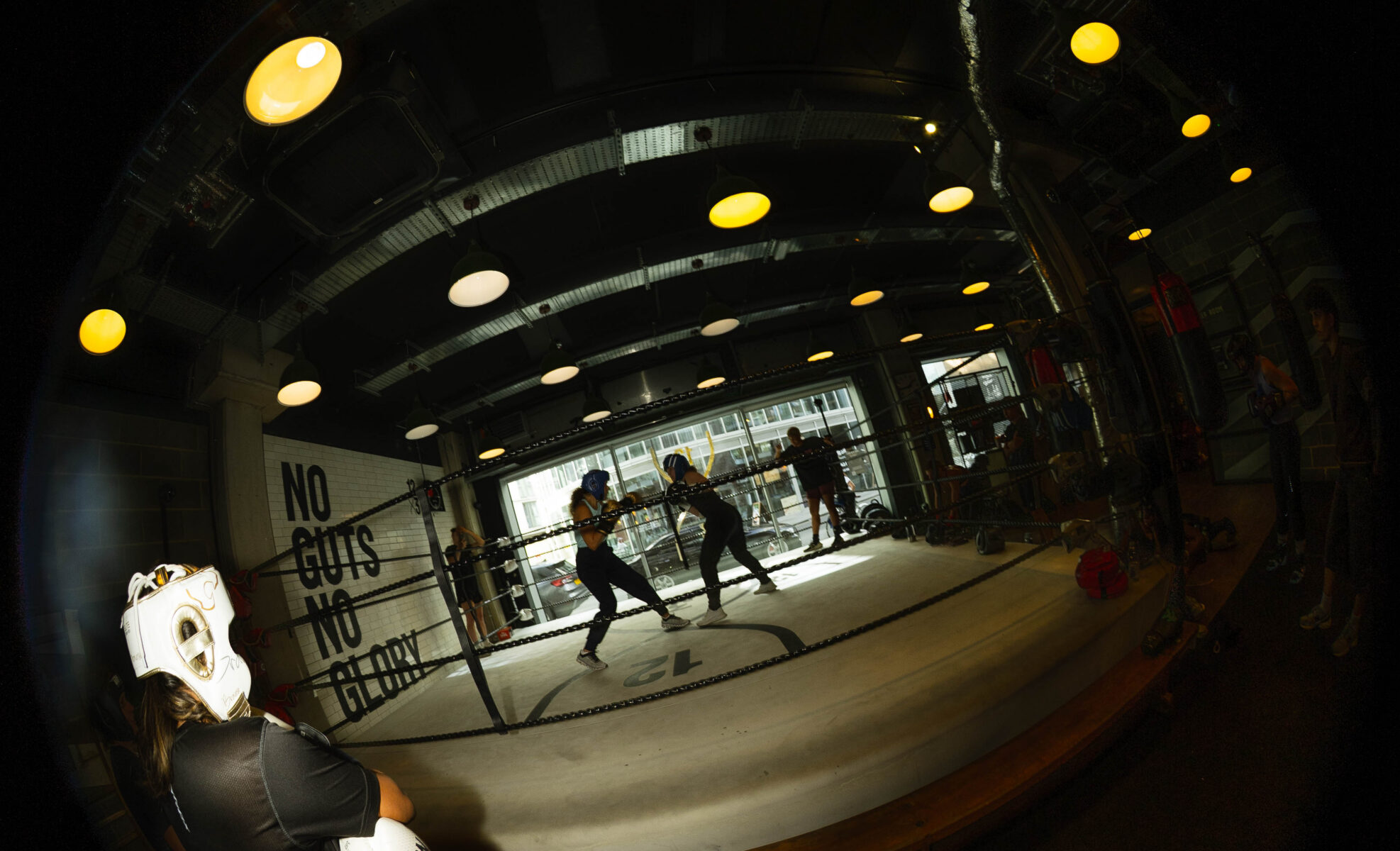
Fight Back
Women have spent centuries being told not to fight. Now boxing and combat sports are attracting a new generation of female fans and participants. Are we finally comfortable with women throwing punches, or are we all just a bit more pissed off?
By Glorious
Boxing has always had a bit of a public relations problem.
Some people see an extraordinary display of skill, timing, footwork and anticipation.
Others struggle to get past the fact that two people are trying to punch each other in the face.
Both have a point.

Women have had their own difficulties when it comes to public perception, particularly where aggression is concerned. An angry man might be passionate, competitive or determined. An angry woman is difficult, hysterical or, God forbid, intimidating. We’ve spent centuries being encouraged to remain polite, agreeable and physically restrained, which is, er, interesting when you consider how spectacularly unsuccessful society has been at protecting women from violence in the first place.

When we started Glorious, wild swimming was having its moment. There was plenty of yoga, a bit of tennis and, eventually, running clubs everywhere you looked. We track what our audience engages with, and as women’s sport has grown and become increasingly professional, we’ve watched those interests change. From 2025 and into 2026, boxing and combat sports have been among the subjects attracting the most attention. MMA, Muay Thai, Brazilian jiu-jitsu, women in boxing gyms, women in cages, women throwing punches. Perhaps it’s because we’re seeing female fighters compete at the highest levels more regularly, with the audiences, prize money and visibility that come with it. Or perhaps we’re all just a bit more pissed off, given the state of the world.

We could fill the next thousand words with statistics about violence against women, the history of female repression and the extraordinary number of ways society has managed to make women’s lives more difficult. There would be plenty of material. The World Health Organization estimates that almost one in three women worldwide have experienced physical or sexual violence.
We could discuss the campaigns, the legislation, the promises and the depressing familiarity of it all. But three women in London have come up with a more interesting response. They’ve decided to put on a boxing night, get women into the ring and use the proceeds to help others who’ve experienced abuse. Frankly, after another year of grim headlines, a room full of women throwing punches sounds good.

visibility

Fight Back Promotions was established in 2026 by former GB boxer Lesley Sackey, three-time national boxing champion Shelly Sweeney and Poppy Mason-Watts, a former Chief Growth and Impact Officer. On 28th November, they’re staging their first event at Ladbroke Hall in London, during the UN’s 16 Days of Activism Against Gender-Based Violence. The ambition is to give female fighters a platform, build a commercially viable promotion with its own audience and direct 25% of event profits towards Fight Forward, which provides boxing programmes for women affected by domestic abuse.

Sackey returned to the ring at 40 after leaving an abusive relationship, with her three daughters watching. In 2023, she founded Fight Forward, developing a ten-week programme combining boxing, conditioning, controlled sparring and workshops for women who have experienced abuse. What started with her own return to the sport has grown into a community offering women the opportunity to train, learn new skills and eventually step into the ring themselves. “I’ve watched women walk into our sessions carrying things nobody else could see, and walk out standing taller,” says Sackey. It’s this experience that she now wants to bring into the competitive side of boxing, creating opportunities for women to train towards a proper event, supported by experienced coaches.


Sweeney started boxing at eleven as the only girl in her gym and went on to become a three-time national champion. She knows the importance of having somewhere to compete and an audience interested in watching. “Putting emerging fighters alongside established names gives fans the opportunity to discover someone new and follow their progress,” she says. It’s an approach that makes commercial sense too. Women’s boxing needs regular events, paying spectators and promoters prepared to invest in fighters before they become household names.
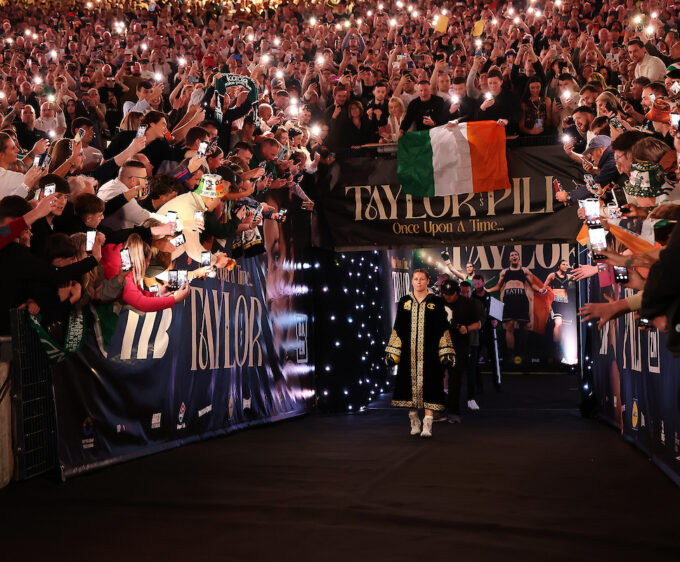
Back in 1998, Jane Couch had to take the British Boxing Board of Control to court to obtain a professional licence. Fast-forward to September 2026 and Katie Taylor was ending her career in front of 83,000 people at Dublin’s Croke Park, defeating Flora Pili to become a three-time undisputed world champion. Her farewell attracted a peak television audience of 1.6 million on RTÉ, with another 552,000 streams on RTÉ Player. Not bad for a sport whose governing bodies once questioned whether women were emotionally equipped to participate.

investment
Of course, selling out Croke Park and building a successful boxing promotion in London are two rather different propositions. Taylor’s extraordinary career has helped prove the audience exists at the top of the sport, but developing the next generation requires smaller events, regular opportunities to compete and people willing to put on the fights. Fight Back’s founders want to build a business around exactly that, with the added commitment that a quarter of the profits from every event will support Fight Forward.

Mason-Watts brings commercial experience and a personal connection to the project, having participated in Fight Forward’s programme herself. Alongside her role as Global Director at Project Dandelion, she works with organisations on strategy, audience growth and partnerships. “We want to build fight nights that people want to attend and brands want to support, and use that business to fund more places for women who otherwise couldn’t take part,” she says. It’s a straightforward model, although establishing a new boxing promotion and attracting a loyal audience will take work.


The first event at Ladbroke Hall will bring emerging fighters together with more established names, giving women who have developed their skills in the gym a chance to compete in front of an audience. Sackey wants them to have an experience worth training for, “with experienced coaches behind them,” and hopes the events will help fund more places on the programme she founded.
Whether Fight Back becomes a permanent fixture on London’s boxing calendar remains to be seen, though the timing feels right. You can spend another Saturday night doom-scrolling through grim headlines, or you can go and watch a room full of women channel that energy into a left hook. Frankly, we know which one sounds more therapeutic…
Get the last few tickets through Official Ticketing Partner SHWDWN at https://shwdwn.co/e/yycn6, priced from £30.
Not in London? The event will be streamed live on Millions PPV.

Get your tickets for Fight Night at Fight Back Promotions.
Find out more about Fight Forward.
Follow Fight Back Promotions on Instagram @thefightbackpromotions & Fight Forward @fightfwd.
Follow the founders on Instagram @lesleyboxersackey, @shellysweeney_ & @popsmw
Share This Article
If you love this you’ll also love...
Growing Strong
A Glorious film features women of all ages and backgrounds at London’s Fighting Arts Academy. Here’s why Mixed Martial Arts is for everyone
EVOLVE Boxing
Behind a roller shutter on an Amersham industrial estate sits a boxing gym full of young fighters, world-ranked coaches, Pilates mums and two wandering French bulldogs. Evolve Boxing Academy is proof that the best stories in sport rarely live where you expect them.
Home of Fighters
Behind every punch lies a story of resilience, identity and transformation. Andrea Mae’s striking portraits take you beyond the gym to reveal the fragile strength and personal battles of fighters who find home where others see only conflict.
Our Katie
Katie Taylor became globally famous without an enemy, a persona or an opinion designed to annoy half the internet, and has always seemed almost magnificently uninterested in the business of being famous. So what can one of sport’s quietest superstars teach us about taking up space?