10 Minutes with Kirsty Coventry
Kirsty Coventry runs the Olympic Winter Games on little sleep, strong tea and a pocket full of pins. As President of the International Olympic Committee, she reveals what it takes to deliver Milano Cortina 2026, one of the most complex sporting events in the world.
By Glorious
There is a woman standing at the top of world sport, and she has chocolate in her bag. Not metaphorically. Literally. “Chocolate! I always have chocolate with me!” Kirsty Coventry says, laughing, adding that living in Lausanne has sharpened her standards. Swiss chocolate is hard to ignore, although Italian chocolate, she concedes, has made a persuasive case and she’s been enjoying it over the past fortnight.
It is an oddly perfect entry point into the presidency of the International Olympic Committee. Detail matters. Ritual matters. The small, human things travel with you, even when the job in question involves biathlon in Anterselva before lunch and skeleton in Cortina before dinner.

Kirsty has been President of the IOC since March 2025, the first woman and the first African to hold the role. The title sounds historic because it is, but the route there was not theatrical. Born in Zimbabwe, she qualified for her first Olympic Games at 16. After Sydney, an Olympic Solidarity scholarship took her to the United States, where she trained and studied hotel and restaurant management. Athens 2004 marked her breakthrough. Beijing, London and Rio followed. Seven of Zimbabwe’s eight Olympic medals belong to her. It is not an abstract statistic. In Zimbabwe, that number means something.
Retirement did not loosen her grip on the Olympic movement. She went home. She founded the Kirsty Coventry Academy to teach children to swim. In 2018 she stepped into public office as Minister of Youth, Sport, Arts and Recreation, navigating the less glamorous, more political side of sport. Within the IOC she moved from athlete representative, elected in 2013, to Chair of the Athletes’ Commission and onto the Executive Board. By March 2025 she was President. Not a leap. A build.
Sport has always functioned as a rehearsal space for leadership, and increasingly the alumni are women who learned to compete early. A 2015 survey by EY and espnW found that 94 per cent of women in C-suite roles had played sport, with more than half competing at collegiate level. Sue Bird now leads USA Basketball’s Women’s National Team programme. Sarai Bareman has overseen the global growth of women’s football at FIFA since 2016. Katrina Adams moved from professional tennis to the presidency and CEO role at the USTA and now chairs the US Open committee. The pathway is no longer unusual. Coventry sits squarely inside that shift, not as a symbol but as proof of concept. (Read more about this subject in this Glorious story.)
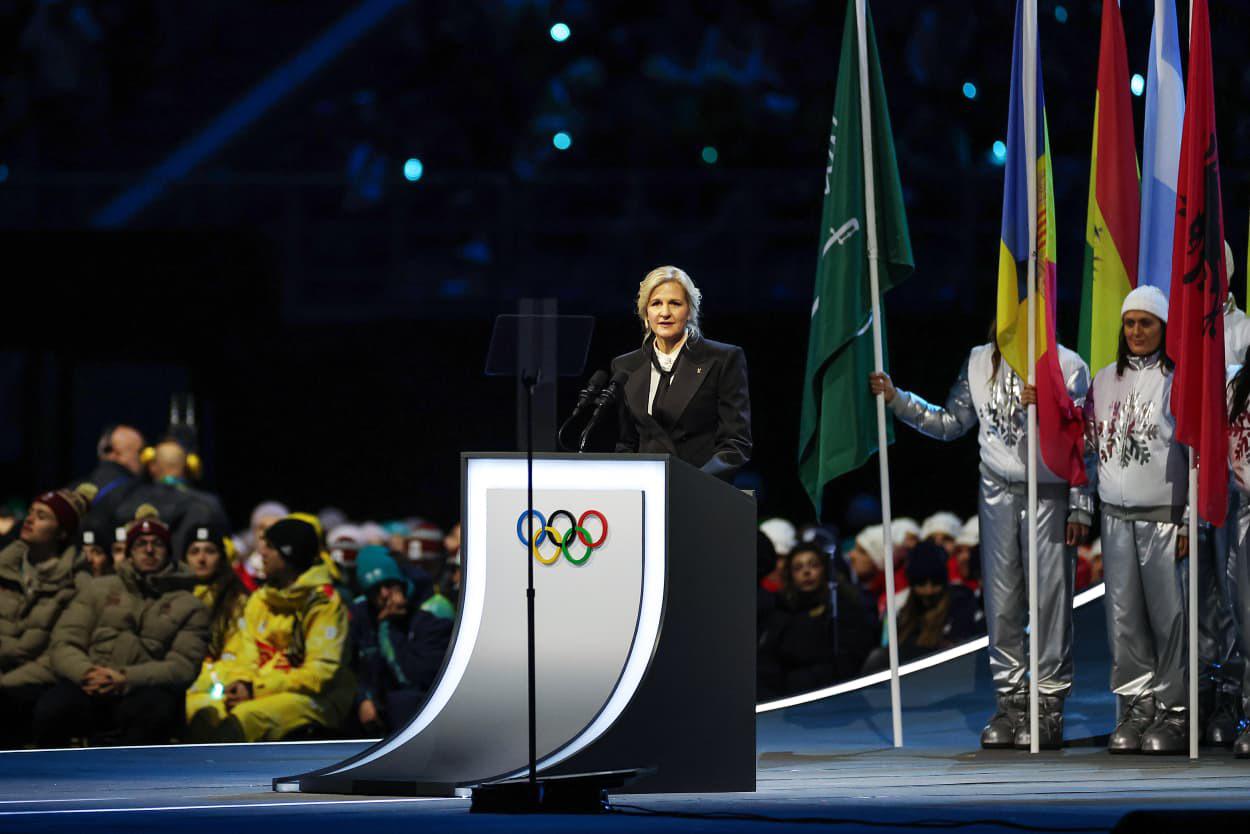
Two weeks ago she stood inside San Siro as the Olympic Winter Games opened in full spectacle. “The whole evening was magical,” she says. “The athletes walking into San Siro, the costumes, the music, the choreography. The lighting of the cauldron, which is always my favourite moment, as it signifies that the Olympic Games are beginning. I was mesmerised throughout the entire night.”

She does not hide her allegiances. “I’m a huge Andrea Bocelli fan,” she says. Seeing him perform in Milano Cortina, twenty years after he sang at Turin 2006, landed personally. “What made it more special, of course, was that 20 years ago he performed during the Opening Ceremony at the Olympic Winter Games Turin 2006, and you could feel that moment, as he sang the first notes of Nessun Dorma, will be etched in history.” Then, almost as an aside, “And yes, I also love a tuxedo jacket.”
The language she chose when addressing athletes (and the watching world) that evening drew on Ubuntu, the Southern African philosophy meaning “I am because we are.” “We can only rise by lifting others. Our strength comes from caring for each other.” It is not a decorative line for her. An Olympic Solidarity scholarship once lifted her. The academy she built is her version of lifting others back. (Watch Kirsty’s full opening speech here )
In Predazzo, watching ski jumping framed by mountains that look painted on, she says there have been “many wonderful moments”. One still makes her smile.
“The Italian speed skater Francesca Lollobrigida became the first Italian woman to win Olympic gold in the 3,000m.
She also set an Olympic record. The atmosphere was electric. When she realised she had won, she ran to hug her son, who was watching from the sidelines, it was so heartwarming. And all on her 35th birthday.”
The stands, Kirsty insists, have carried their own narrative. “Seeing how passionately the Italians are getting behind all the athletes has been amazing. Watch the faces in the crowd, and you can see that they are feeling all the emotions of the Olympians with them, and not just those from their own country, but athletes from all around the world. That’s the Olympic spirit, and it’s been so beautiful to see.” In Cortina she clocked families of every generation cheering in between making snowmen, the Games woven into something recognisably domestic. “I’ve also really enjoyed the spontaneous, heartfelt moments, including the various marriage proposals!” she adds.

Kirsty is in full workflow before most spectators have risen, and before a few medal winners have finished celebrating (turns out Milan is hosting not only half the Games but some spectacularly late opening night clubs. That, however, is a different story!) Her 6.15am alarm, a carryover from swimming, still sets the rhythm. A cup of tea. A quick check for handbag essentials: Phones. Gum. Sunglasses. Olympic pins. “You can’t go anywhere in the Olympic Games without having pins to share!” she laughs.
By 7.30am Kirsty is with her team, debriefing the previous day and mapping out the next 24 and 48 hours, often with a touch point with the Organising Committee.
From there it is movement. Between athletes and sport. Media interviews. Partner meetings. Olympic Villages. Venues spread across the mountains. Dinner with athletes one evening. Travel across regions the next. The calendar does not blink.
There are sacrifices when you uproot and work across regions for weeks at a time. “Ty often sends me videos of my girls, who are currently back in Lausanne,” she says. “They really make me smile, and it’s a lovely way to feel connected. Those videos, as well as great people around me, keep me grounded.” For a few days during the Games, her husband Ty and their two daughters were there in person. “Being a part of this moment was special for me and for them as well.” “I’m looking forward to having them back here in a few days.”
achievement

When the snow begins to thin on the mountains and the flame is finally extinguished, what remains is not the spectacle but the memory of having stood there at all. Kirsty hopes that feeling lingers long after the arenas empty. “I hope they remember how incredible they are for competing in these Olympic Winter Games and for achieving their goals,” she says. “I hope that living this experience will not just inspire them but also their friends and family, and their communities. I also hope that based on their experience here, they have full confidence in whatever their next steps are going to be, whether that’s back to training, whether that’s transitioning into another career, and they know that they just achieved something that only a few people get to do in a lifetime.”
Oh, and if you’re wondering, the chocolate in her handbag is Swiss, from her home of Lausanne. Italian chocolate during the Games has made a compelling case she notes, but the President of the International Olympic Committee has standards. And she applies them consistently.

Title Image: Kirsty giving her opening speech at Milano Cortina Opening Ceremony, courtesy of International Olympic Committee (IOC)
Watch Kirsty’s full opening speech here
Find out more about the Milano Cortina 2026 here.
Interview courtesy of the International Olympic Committee’s Olympic Games Promotions team
Share This Article
If you love this you’ll also love...
Cold Couture
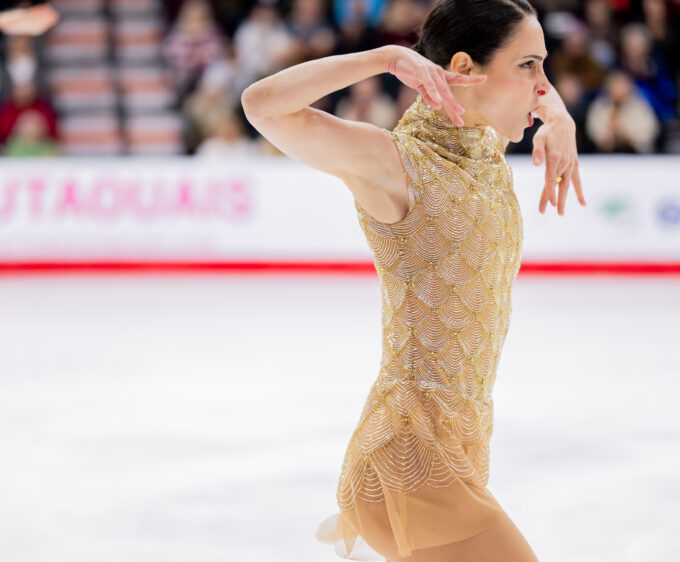
Six hundred and sixty hours of hand-beading, one lost FedEx package, a tribute to the Spice Girls and a $100,000 Oscar de la Renta dress. Figure skating just had its most fashionable Winter Games ever.
Qualified
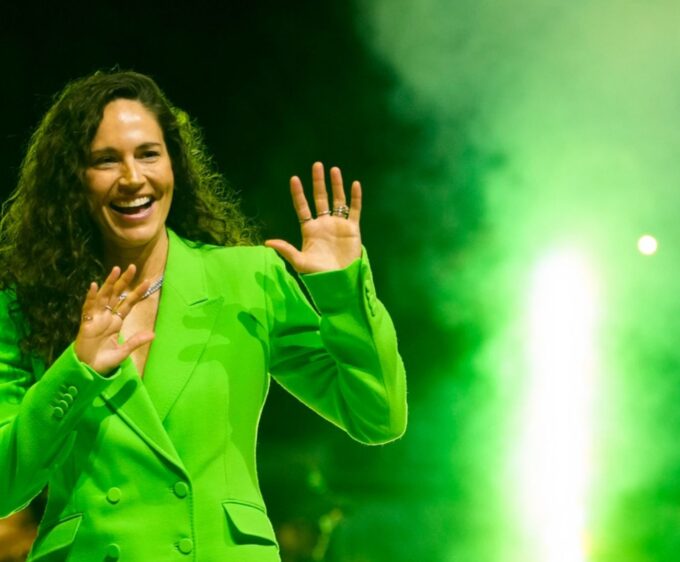
Opinion: Sue Bird’s appointment is what good hiring looks like. After twenty years in sport, one writer asks why leadership pipelines for women are still so often treated like fairy tales.
Cold Kits
Before a single ski leaves a track or a bobsled hurtles down the run, Milano Cortina 2026 has already crowned its fashion winners. Here's our definitive ranking of who's winning before the competition even starts.
Olympic Outcast
Nordic combined is dying on its feet and women are the only thing that can save it. Annika Malacinski is fighting to make sure 2026 is the final year she is forced to stay cheering her brother on from the sidelines.